What is prepress?
Prepress is where design becomes production
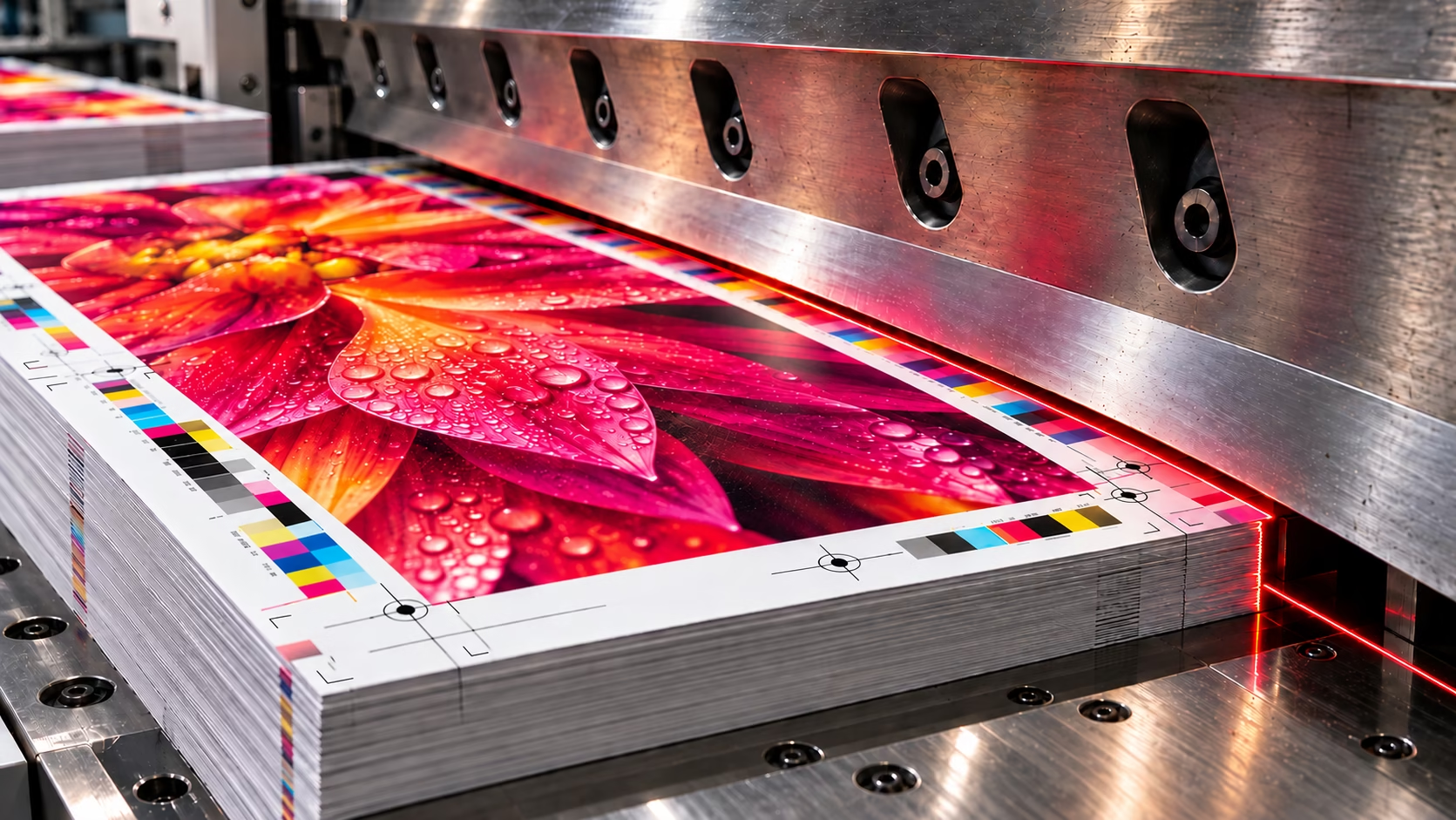
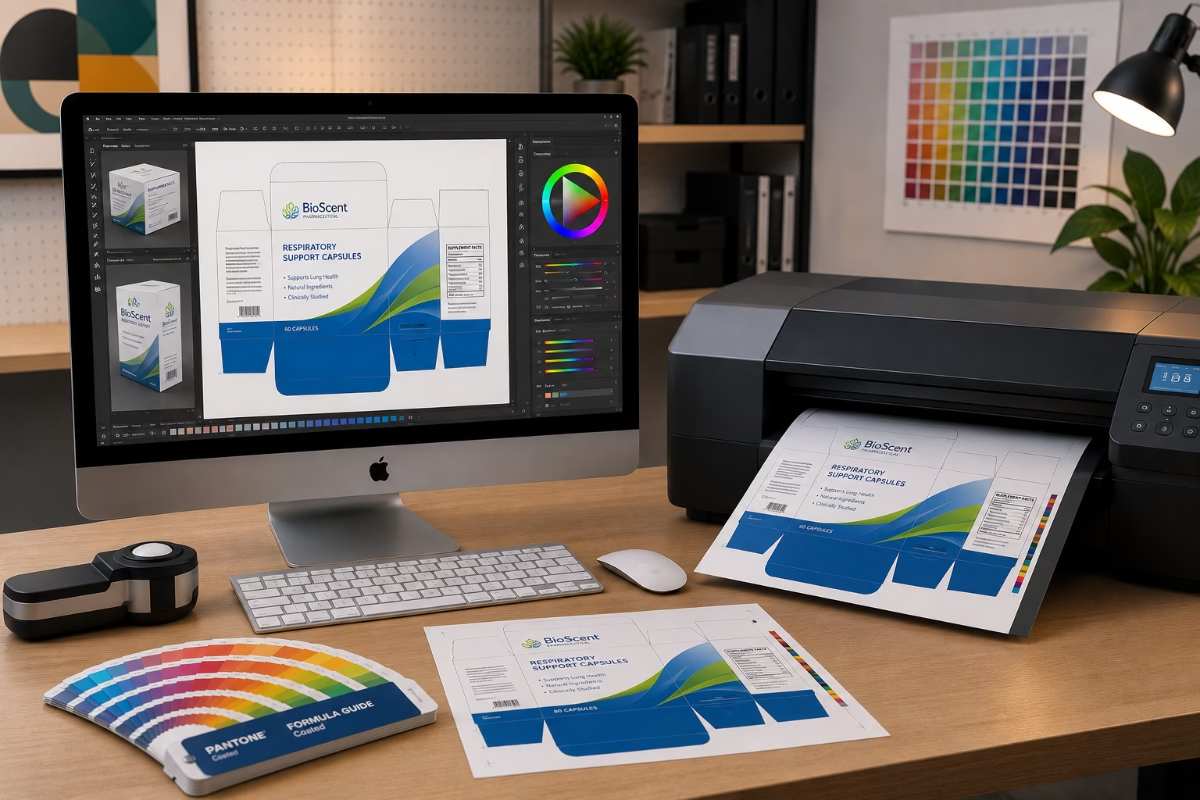
Prepress is the process of preparing digital artwork and files for professional printing. It includes page layout, typography, image preparation, colour management, proofing and preflight checks to ensure that artwork is accurate, technically correct and ready for production. Effective pre-press helps prevent printing errors, maintain colour consistency and deliver the finished result as intended.
What is prepress? It is where prepress fits into printing
A printed job normally passes through several stages before the finished printed product reaches the customer.
The workflow typically begins with the original concept, detailed specifications, or project brief, followed by the design phase and artwork creation. Once the design receives approval and sign-off, it generally proceeds to the printing facility. At this stage, the Prepress department becomes instrumental in the process. The submitted artwork undergoes thorough examination and preparation to ensure readiness for the printing process. Should any component of the file contain errors or improper configuration, the job risks printing incorrectly on the press, large format device, or digital printer. Numerous verification points must be systematically reviewed, corrected, and validated before the layout is finalized and transferred to plate production.
Prepress sits between designer and production
Its purpose is not to redesign the customer’s work or decide what the customer should have ordered. The artwork has normally already been approved. Prepress is only concerned with making sure that the approved artwork is technically suitable for the way it is going to be produced. It does not check copy, telephone numbers or content.
That distinction is important. A beautifully designed file can still contain technical problems that will cause difficulties when it reaches production.
It is easy to think of prepress as simply checking PDFs, but the job is considerably broader. Depending on the type and size of the printer, prepress can involve artwork checking, image preparation, colour management, trapping, imposition, proofing, plate preparation, nesting and the preparation of files for digital presses, offset presses, large-format printers, packaging presses and other production equipment.
The work may be carried out by a dedicated prepress department, by several specialists or, in a smaller printer, by one person who handles most of the process.
What does a prepress department actually do?
The answer depends very much on what is being printed, how it is being printed and how sophisticated the printer’s production workflow has become.
A small commercial printer may have one person doing almost everything, while a large printing company may have dedicated specialists dealing with colour management, workflow, proofing, packaging, flexography, imposition and plate production.
Much of the repetitive checking that once had to be performed manually can now be automated, with modern production systems capable of checking files, managing colour, imposing pages, preparing layouts and passing production information from one stage of the process to another. However, automation has not removed the need for prepress expertise; it has changed where that expertise is required.

A typical commercial prepress department may deal with:
- PDF preflight and artwork checking
- Page size and document dimensions
- Bleed and trim
- Fonts and missing typefaces
- Image resolution
- RGB and CMYK images
- Spot colours
- Colour profiles
- Overprinting and knockouts
- Transparency
- Trapping
- Page order
- Artwork orientation
- Dielines and cutting information
- Folds and finishing marks
- Imposition
- Proofing
- File formats and PDF standards
Not every job requires all of these processes. A simple digital print job may require relatively little intervention, while a complex packaging job can involve a considerable amount of technical preparation.
The important point is that prepress is specific to the production process. A file that is perfectly acceptable for one form of production may need to be prepared differently for another.
Prepress in a small or medium-sized printer
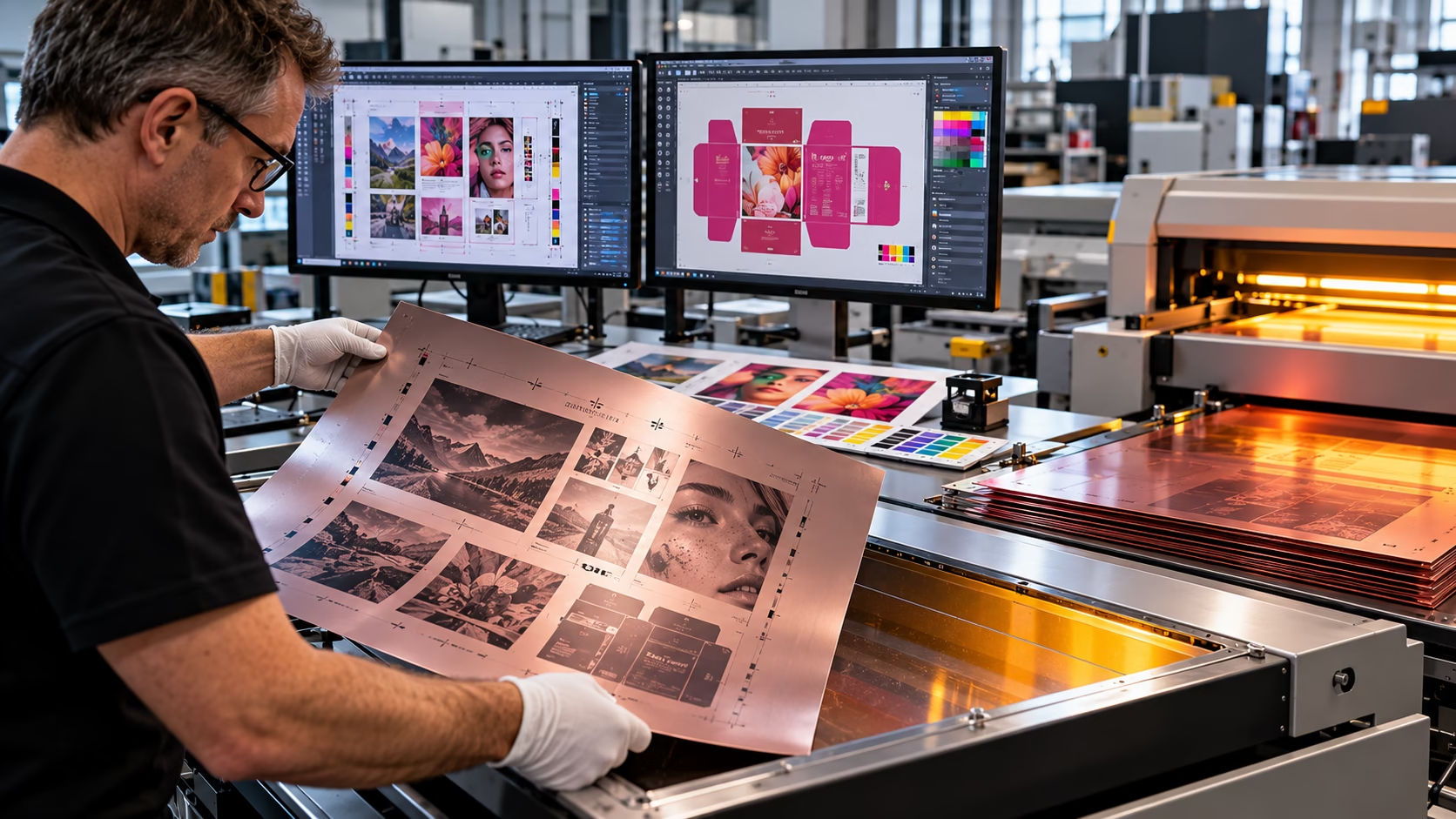
In a smaller print company there may not even be a department called “Prepress”. One experienced person may receive the customer’s artwork, check and correct the files, manage colour, prepare the job, impose it, produce a proof and finally send the finished production data to a digital press or platesetter.
The same person may deal with customer-supplied PDFs for business cards, leaflets, brochures, magazines, posters, stationery and digital print, as well as preparing repeat work that needs to be reproduced consistently from one production run to the next.
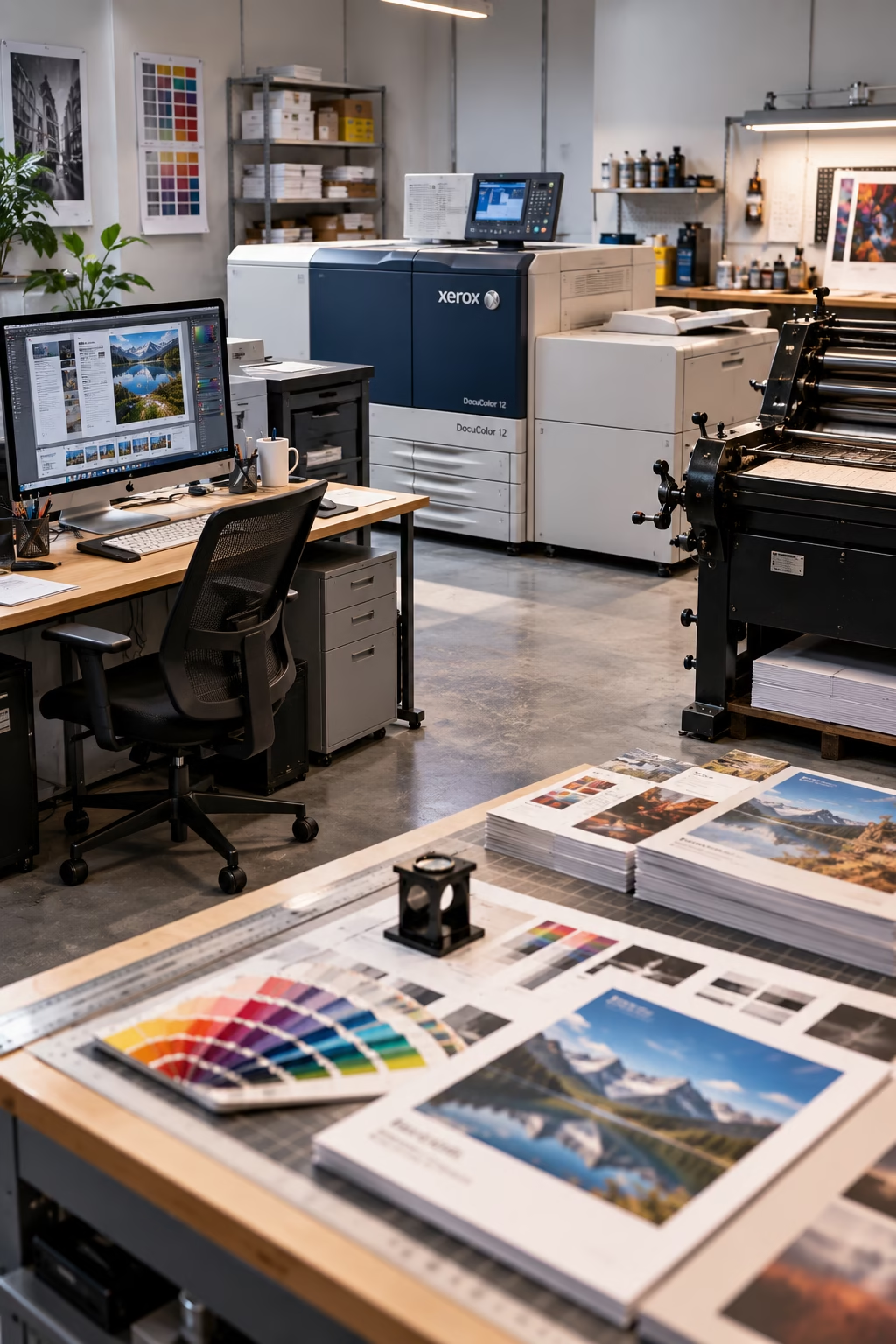
The prepress operator is usually working within a clearly defined production process. The customer has supplied the artwork, the job has been specified and the printer has determined what is required for production. The operator’s responsibility is to make sure the artwork is correctly prepared for that particular production process.
That can involve checking file formats, page sizes, bleeds, fonts, images, colour spaces, overprinting, trapping, resolution and imposition. If something is wrong, it needs to be identified and corrected before the job reaches the press. There is often little direct contact with the customer and, in many companies, very little involvement in the design itself. The designer has created and approved the artwork; prepress is responsible for ensuring that the approved artwork can be produced correctly.
Prepress is not there to redesign the job or decide what the customer should have ordered. It is there to prepare the job for production. And when something reaches the press that should have been caught in prepress, the consequences can be expensive. A mistake can waste paper, ink, press time and finishing time, and in a busy print company the person responsible for missing that mistake may be expected to explain why it happened.
Prepress is therefore a critical production stage, even when the department consists of only one person.
Traditional prepress
Before digital workflows transformed the printing industry, prepress was a largely physical and photographic process.
Artwork was assembled from separate elements, photographs were prepared and reproduced photographically, type was set and film was produced. Colour separations were made for the printing process and the resulting films were used to produce printing plates.
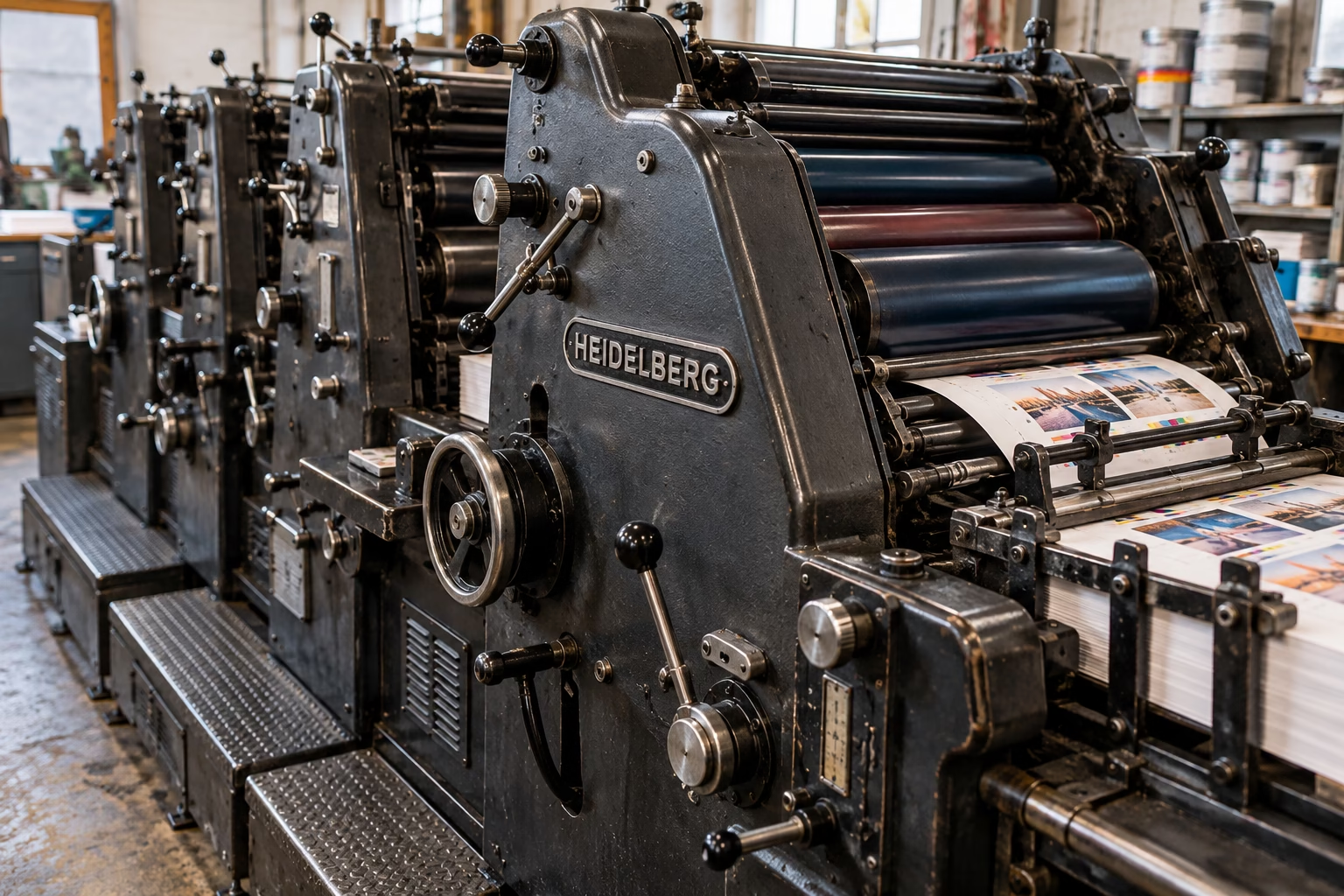
Much of the work required specialist equipment and considerable practical experience. A prepress department might contain cameras, light tables, film processors, scanners, proofing equipment and other specialist machinery. Skilled operators worked with film, photographic materials, masking, stripping and mechanical artwork. The move to digital prepress changed almost everything.
The arrival of digital prepress
Desktop publishing and the Apple Macintosh changed the way artwork was created and prepared for print. Software such as PageMaker, Illustrator and Photoshop brought typesetting, illustration and image manipulation onto the computer. What had previously required several separate stages of photography, typesetting and manual assembly could increasingly be carried out digitally. The role of prepress changed with it.
Instead of physically assembling film and stripping pages, operators began working with digital files. Scanners replaced some photographic processes, desktop publishing replaced much of the manual artwork, and computer-to-plate technology eventually removed the need for film in many conventional printing workflows.
The work became faster, more flexible and considerably more sophisticated, but the underlying purpose remained the same: prepare the job correctly for production.
Prepress for commercial print
Commercial print includes a huge range of work, from business cards and leaflets to brochures, magazines, catalogues, books and corporate literature. The prepress requirements vary with the job.
A simple business card may require little more than checking the PDF, confirming the size and bleed, checking colour and preparing it for the digital press.
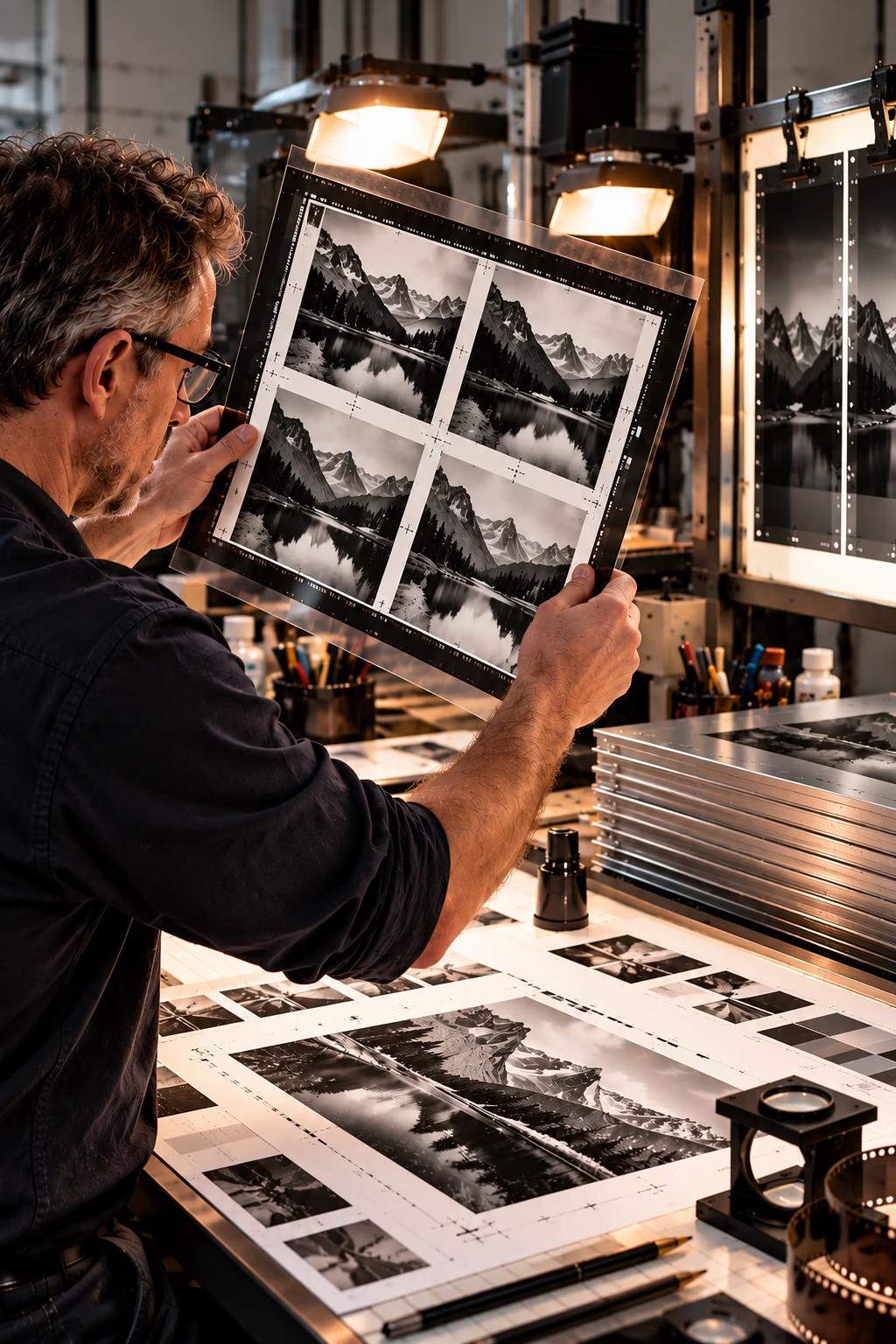
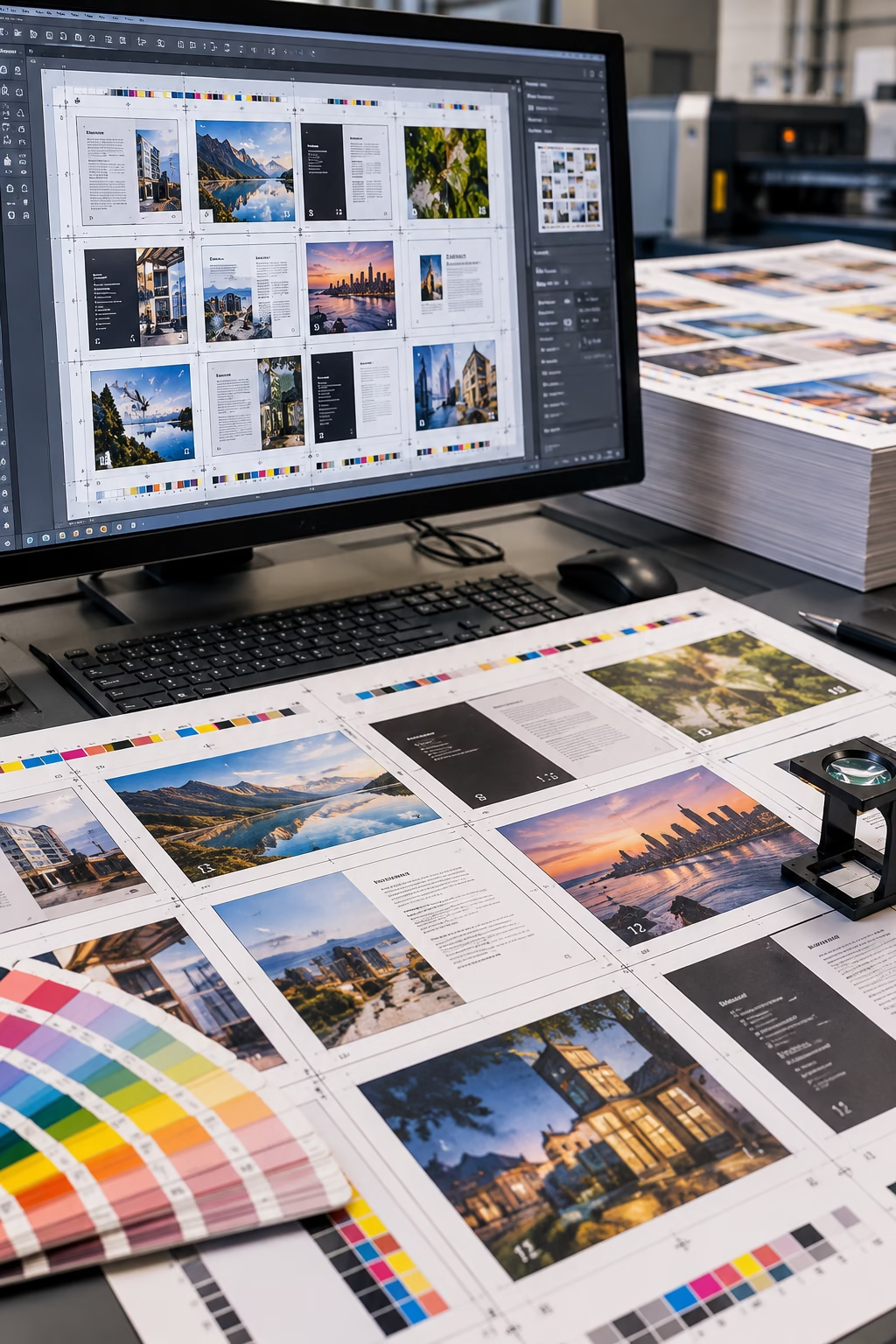
A magazine containing hundreds of pages is considerably more involved. Pages may need to be checked, corrected and imposed into the correct arrangement for printing, folding and binding. The finished pages do not necessarily appear on the printing sheet in the same order that they appear in the finished publication. Imposition arranges them so that after printing, folding, cutting and binding, the pages are in the correct sequence.
This is one of the areas where prepress knowledge becomes particularly important.
Imposition
Imposition is the arrangement of pages on a printing sheet so that they will be in the correct order after the printed sheet has been folded and finished.
The arrangement depends on the finished size, number of pages, printing process, sheet size, folding method, binding method and finishing requirements.
Modern imposition software can automate much of this work, but the operator still needs to understand what the software is being asked to produce.
A technically correct PDF can still produce the wrong finished publication if the imposition or production settings are wrong.
Prepress for digital printing
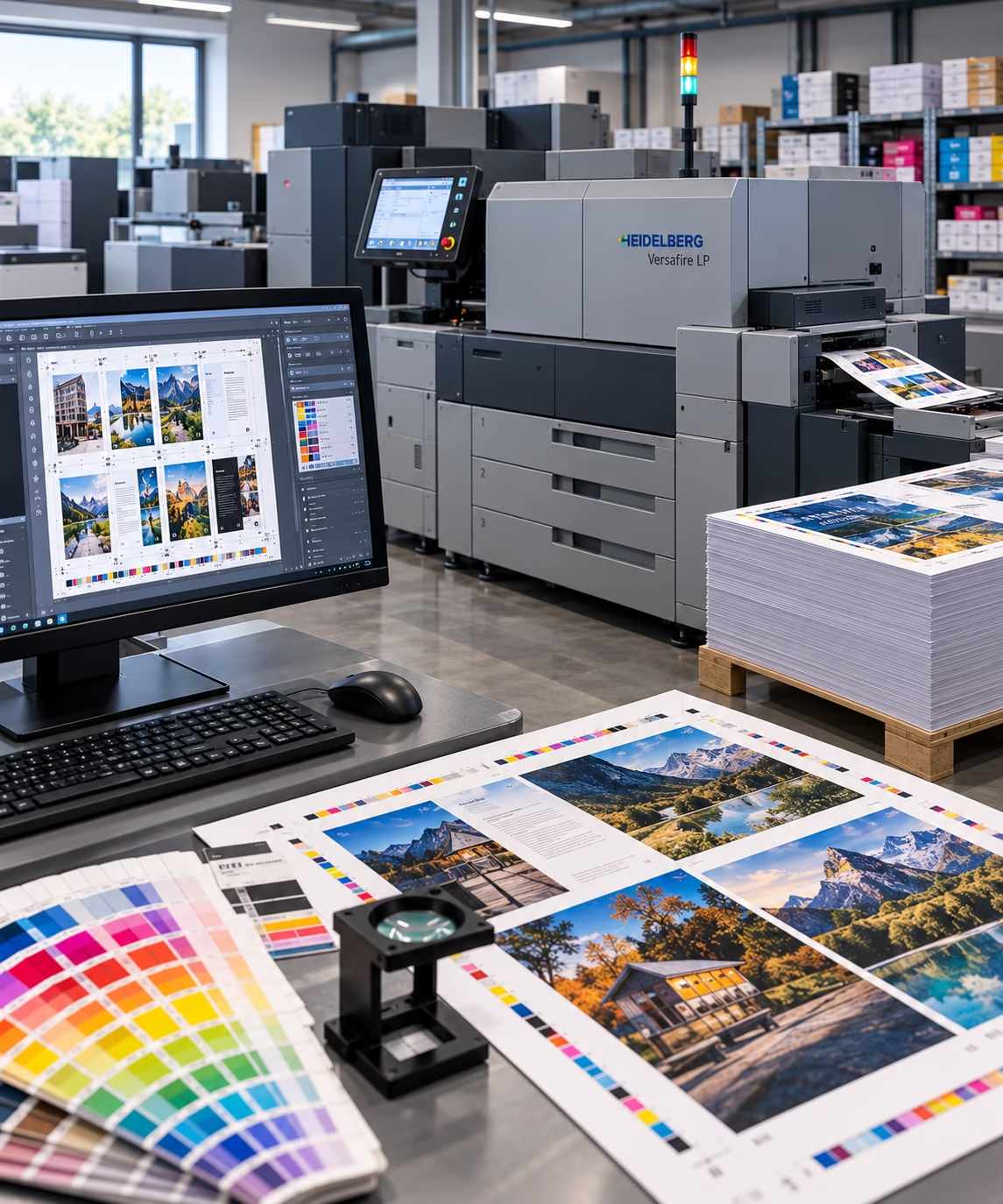
Digital printing has changed the economics of short-run print. There is no requirement to produce conventional printing plates for many digital presses, which makes the process particularly suitable for short runs, variable data and jobs that need to be produced quickly.
Prepress for digital printing can therefore be relatively streamlined, but it is not eliminated. Files still need to be checked and prepared. Colour still needs to be managed. Pages still need to be imposed where appropriate, and finishing requirements still need to be taken into account.
Modern digital presses can also have sophisticated colour management and automated workflows, allowing many routine decisions to be handled by the system. The prepress operator remains responsible for making sure that the correct production data is supplied to that system.
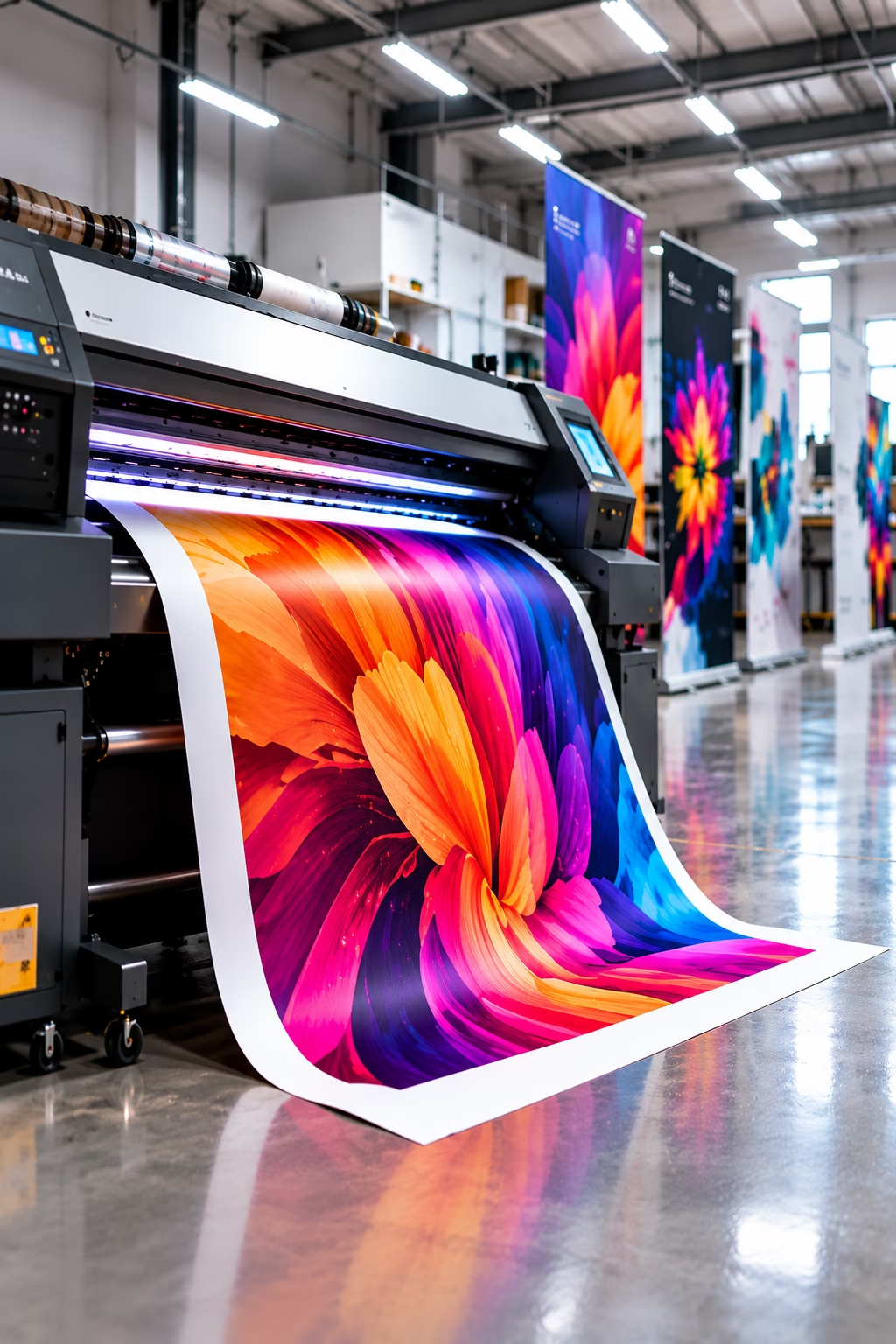
Large-format prepress
Large-format printing introduces a different set of requirements.
Artwork may be produced for exhibition graphics, banners, posters, window graphics, vehicle graphics, wall coverings, signage and other large printed surfaces. The physical size of the finished item can be substantial, and the artwork may need to be prepared at a scale appropriate to the viewing distance and production equipment.
Large-format work can also involve multiple panels, joins, tiling, cutting paths, nesting and specialist finishing. Nesting is the process of arranging multiple pieces of artwork efficiently within the available material. Good nesting can reduce material waste and improve production efficiency.
The prepress process therefore has to take both the artwork and the physical production method into account.
Flexographic prepress
Flexographic printing is widely used for packaging, labels, bags, films and other flexible materials.
Its prepress requirements are different from those of conventional commercial lithographic printing.
Artwork may need to accommodate the characteristics of the flexographic process, including dot gain, trapping, minimum printable elements and the behaviour of different substrates and inks.
Printing plates are also produced specifically for the flexographic process.
This makes flexographic prepress a highly specialised area. The operator is not simply preparing a PDF; the artwork is being prepared for a particular printing process and the physical characteristics of the finished product.
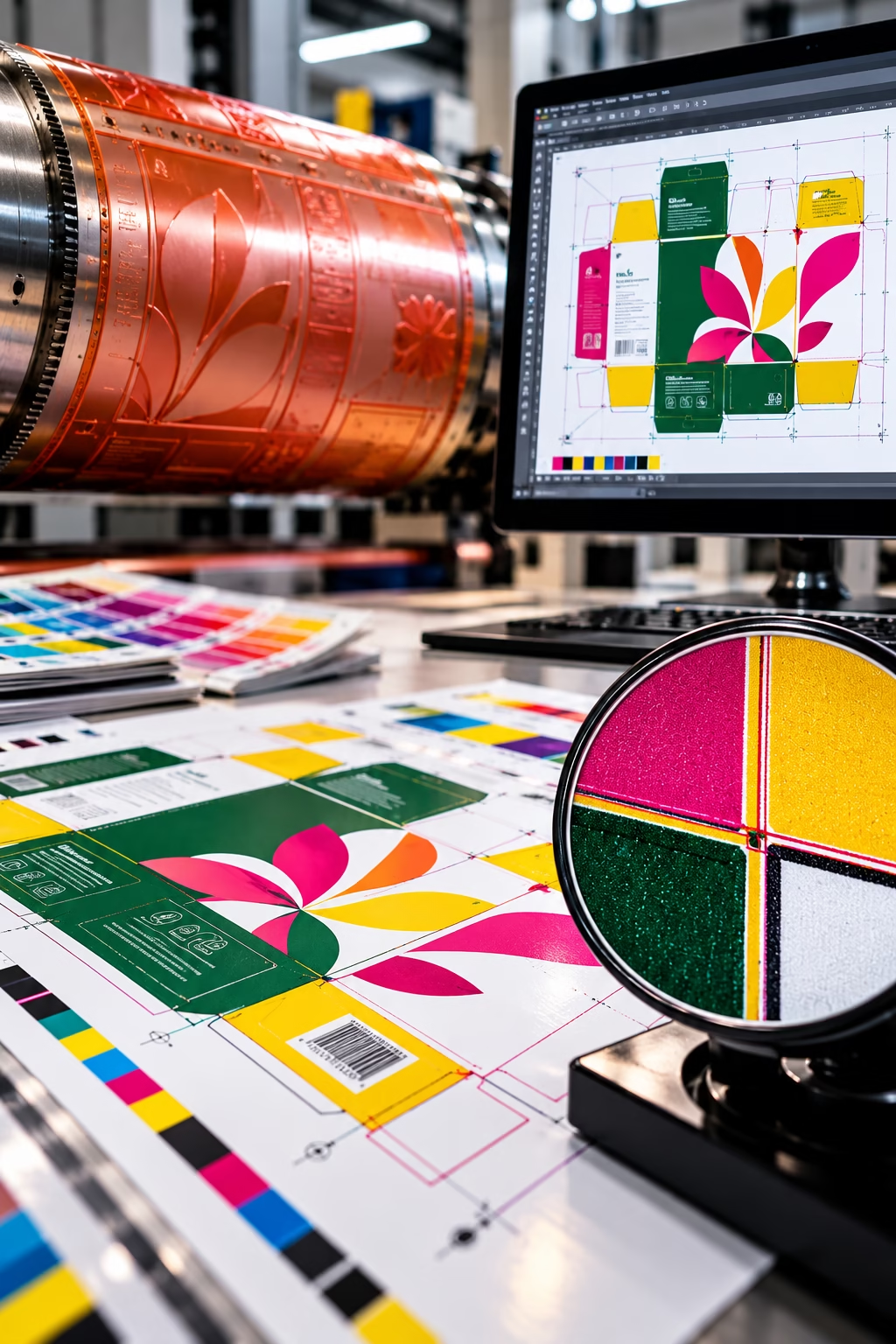
Packaging prepress
Packaging can be one of the most technically demanding areas of prepress.
A package may need to be printed, cut, creased, folded, glued and assembled. The artwork therefore has to work with a physical structure rather than simply occupying a rectangular sheet.
Packaging artwork can include dielines, cutting paths, creases, folds, varnishes, white ink, metallic effects, spot colours and other production information. The relationship between artwork and the physical package is critical. A small error in positioning can become very obvious when a flat printed sheet is folded into a three-dimensional package.
Colour is a major part of prepress
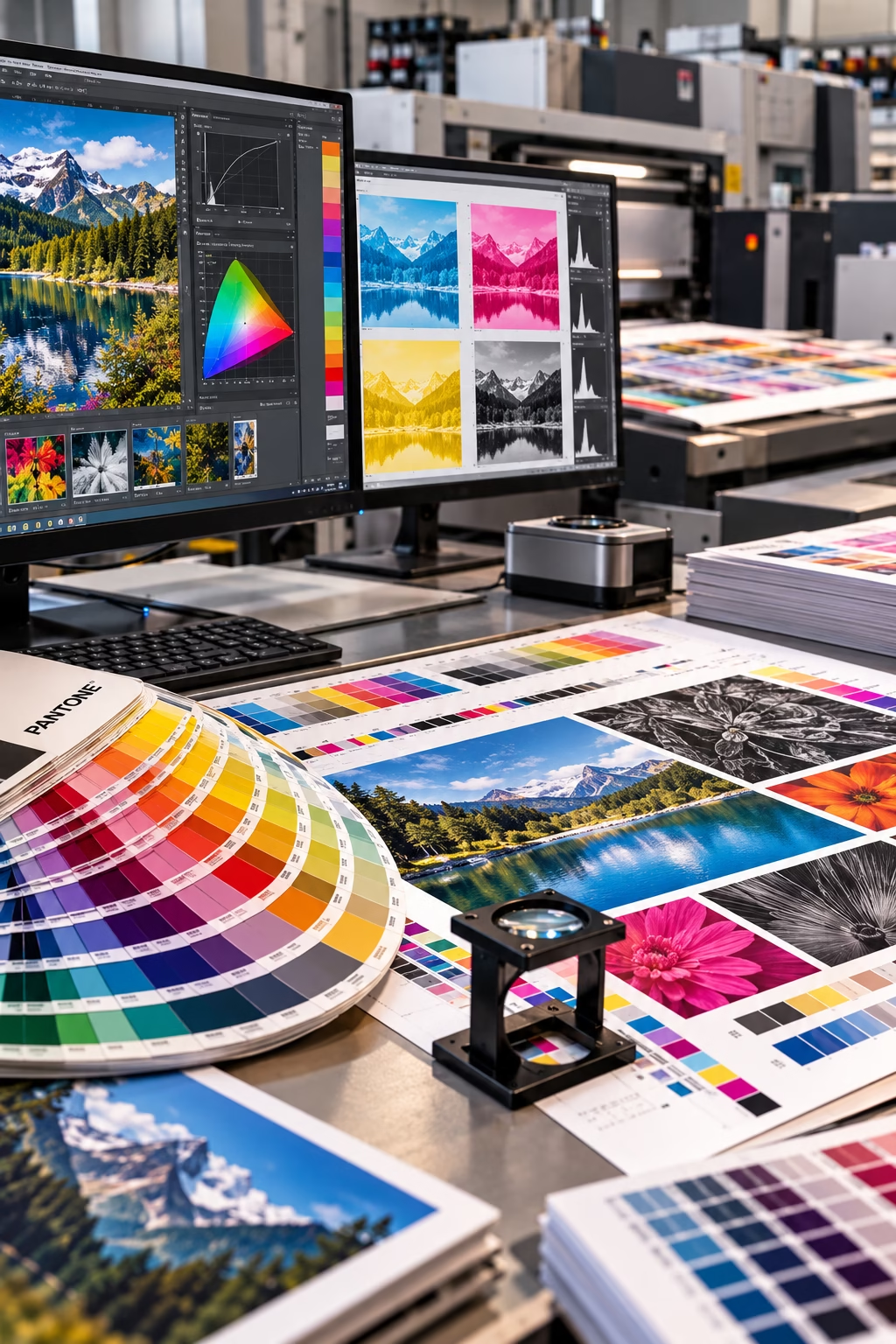
Colour is one of the areas where the difference between design and production becomes particularly important. A designer may work with colour on a calibrated or profiled screen, while the final product may be printed using CMYK inks, spot colours or a specialist ink set.
RGB and CMYK are not simply two different ways of describing the same colour. They are based on different methods of creating colour and have different colour gamuts. A colour that can be displayed on a screen may not be reproducible using a particular printing process.
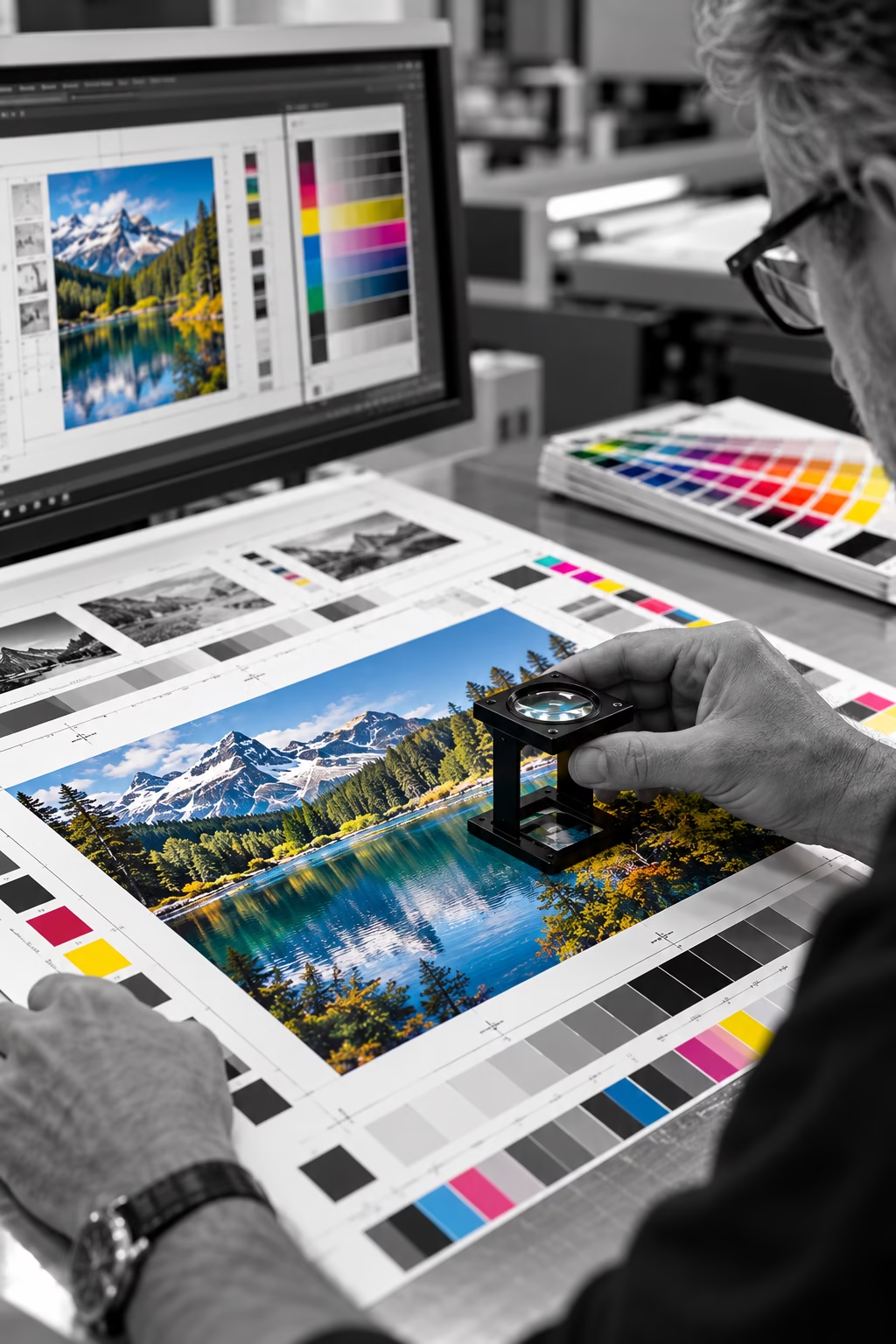
Prepress therefore involves understanding how colour will behave during production and making sure that the files are prepared appropriately. Colour management, profiles, separations, spot colours and proofing all form part of this process.
Proofing
A proof provides an opportunity to check a job before it is committed to full production.
Depending on the job, a proof may be used to check content, page order, colour, positioning or the overall appearance of the finished work.
Not every proof serves the same purpose. A screen proof, contract proof and machine proof can provide different levels of information.
The proofing process is particularly important for jobs where an error would be expensive to correct after production has started.
Automation
Modern prepress is increasingly automated. PDF checking, preflight, colour conversion, imposition, proofing and workflow management can all be handled by sophisticated software.
A modern workflow may automatically check files as they arrive, identify common problems and route jobs to the appropriate production process. This does not mean that prepress has disappeared.
Automation is particularly effective at repetitive and predictable tasks. It is less effective when a job contains something unusual, when a problem requires interpretation or when the production result does not match what was expected.
The role of the operator has therefore changed from carrying out every operation manually to managing increasingly sophisticated systems and dealing with the problems that automation cannot resolve.

The prepress operator today
The modern prepress operator needs a mixture of technical knowledge and practical experience. They need to understand artwork, typography, images, colour, PDF construction, printing processes and finishing. They also need to understand the particular equipment and workflow used by the company they work for.
Experience remains important because not every problem is obvious from looking at a PDF. A file can pass an automated preflight and still produce an unexpected result in production. Conversely, something that appears unusual in a file may be completely intentional and cause no production problem at all. Knowing the difference comes from understanding how files behave when they are actually printed.
What happens when prepress gets it wrong?
Prepress errors can be expensive. A missing bleed may produce a visible white edge. An incorrect colour setting may produce an unexpected result. A missing font can alter the appearance of a page. An incorrect imposition can put pages in the wrong order. A problem with a dieline can affect the finished package.
Some errors are caught before production. Others may not become apparent until the job reaches the press or finishing department. Once production has started, the cost of an error can increase rapidly. Paper and other substrates may have been consumed. Ink, press time, finishing time and labour may already have been used. If a large run has to be repeated, the financial consequences can be considerable. That is why prepress remains such an important part of the printing process.
The future of prepress
Prepress is becoming increasingly automated, but the underlying requirement has not changed. Someone, or something, still has to make sure that the production data is correct. The future prepress environment is likely to involve more automation, artificial intelligence, automated file checking, intelligent workflow management and increasingly capable production equipment.
Routine errors will increasingly be identified automatically. Files will be processed with less manual intervention and workflows will become more connected from artwork through to production. The prepress operator is therefore likely to spend less time carrying out repetitive corrections and more time supervising workflows, dealing with exceptions, checking unusual jobs and managing the systems that connect artwork to production. The knowledge will still matter.
Someone needs to understand why a file has produced an unexpected result, whether an automated correction is appropriate and what the consequences will be when the job reaches the press.
Read our article on the future of Prepress here
Prepress has changed – but its purpose has not
The technology used in prepress has changed almost beyond recognition. Film has largely disappeared from modern workflows. Digital files have replaced much of the physical preparation that once took place in reprographic departments. Computer-to-plate has replaced film-based plate production in conventional printing, while digital presses have removed the need for plates altogether in many applications.
Automation now handles many tasks that once required skilled manual intervention. But the fundamental purpose of prepress remains exactly the same. Take the approved artwork and prepare it correctly for production.
Whether that means checking a two-page leaflet for a digital press, imposing a 96-page magazine, nesting a set of exhibition graphics, preparing a flexographic plate or checking the artwork for a complex package, prepress is the stage where digital artwork becomes production-ready.
That is why good prepress is often invisible. When everything is correct, the job simply goes to press and works. When it is not, everyone notices. Prepress is the final technical safeguard between artwork and production.
Explore the world of PrePress