How to write a slogan or tagline that works
A good slogan or tagline can become one of the most recognisable parts of a brand. A few carefully chosen words can communicate an idea, establish a personality and make a company easier to remember.
But writing one is not simply a matter of finding a clever phrase. The strongest slogans usually come from a clear understanding of the brand, its audience and what it wants to say. The words come last. The thinking comes first.
Slogan or tagline – what is the difference?
The terms slogan and tagline are often used interchangeably, and there is no universally accepted distinction. Generally, a tagline is associated with the brand itself and is intended to have some longevity. It can sit alongside a company name or logo and reinforce the brand’s overall proposition. A slogan is more often associated with a particular product, service, campaign or marketing message.
The distinction isn’t absolute. What matters is not which word you use, but whether the words perform the job required of them.
Start with the proposition
One of the biggest mistakes in slogan or tagline development is starting with the words. It is tempting to open a blank page and begin writing:
- Quality you can trust.
- Ideas that inspire.
- Creating a better future.
The problem is that phrases like these can sound perfectly acceptable while saying very little about the particular organisation behind them. The other problem is that it is not new or different, it leads you away from your goal.
Before writing a single word, establish the core proposition. The proposition is the underlying idea you want people to associate with the brand. It should answer questions such as:
- What does the organisation actually stand for?
- What does it do particularly well?
- What makes it different?
- What matters to its customers?
- What does it want to be known for?
- What is the most important idea you want people to remember?
Once that is understood, the words become much easier to find.
Before you write a slogan
A good slogan doesn’t start with a clever phrase. It starts with understanding the brand. Before you begin writing, you need to know what the business stands for, what it does for its customers and, importantly, how it makes them feel.
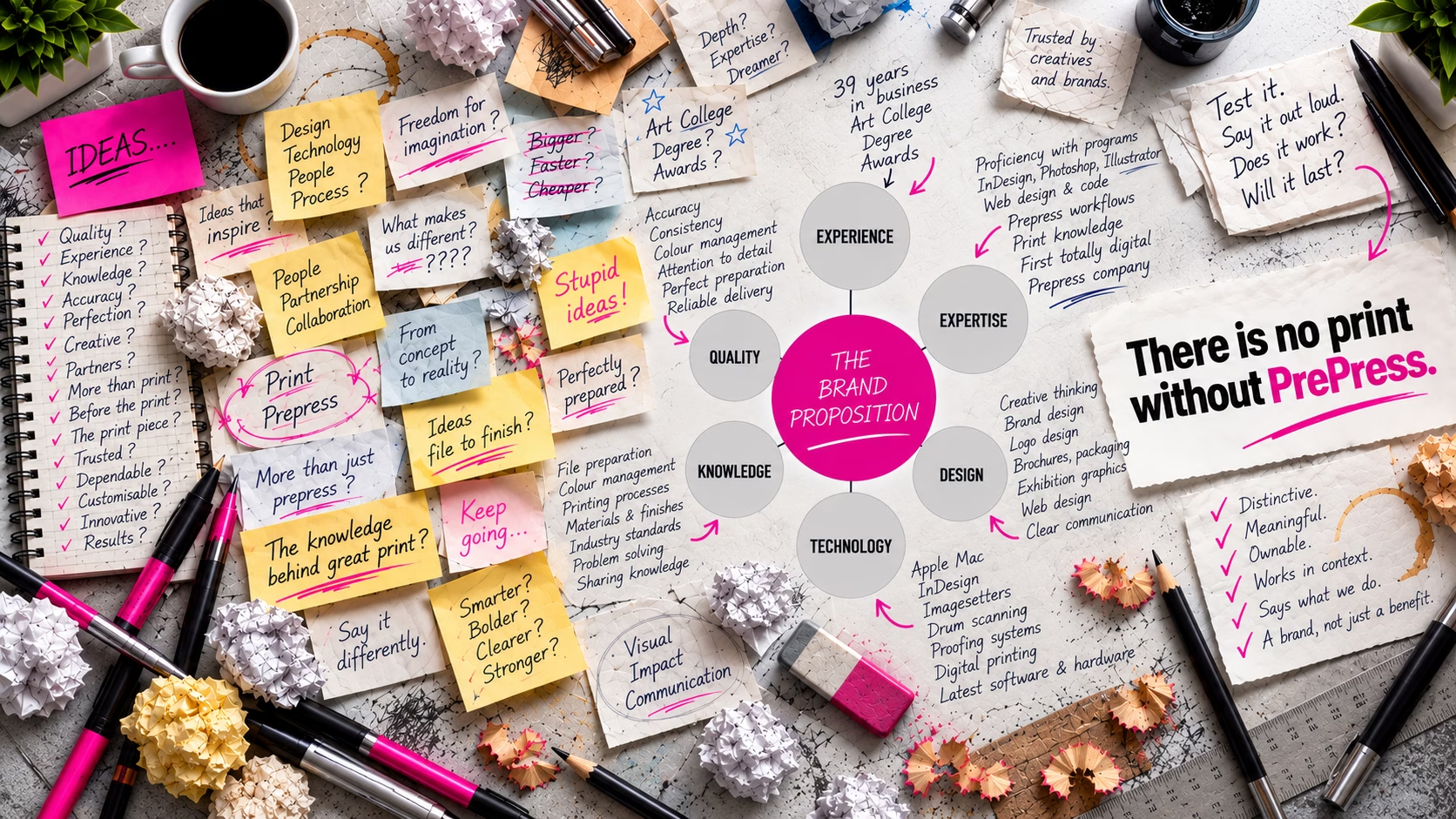
This is where a Brand Wheel or Core Proposition Wheel can be useful. It helps you look at the brand from different perspectives and build a collection of words, ideas and phrases. Think of these as the ingredients for your slogan.
What does the product or service do for me?
- How would I describe the product or service?
- Keep your answer short and natural. Don’t try to write marketing copy.
- What does it actually do? What problem does it solve? What does it provide?
You’re looking for the words that customers, staff and people who know the business would naturally use.
Brand values and personality
- What does the company stand for?
- What principles guide the business?
- What sort of personality does it have?
Is it professional, friendly, dependable, innovative, traditional, adventurous, straightforward, reassuring or something else? These characteristics can have a major influence on the language and tone of your slogan.
Functional Benefits
- What does the product or service actually do for me?
- These are the practical and tangible benefits the customer receives.
- Does it save time? Solve a problem? Make something easier? Improve performance? Save money? Provide better quality?
Think about the real-world result rather than simply describing the product.
Emotional Benefits
- How does the brand make me feel?
- Think beyond what the product does.
- Does it make the customer feel confident, secure, reassured, excited, successful, proud or in control?
- The emotional benefit is often where the most powerful slogan ideas are found.
Self-Expressive Benefits
What does choosing this brand say about me? Sometimes a brand is chosen because of what it says about the person using it.It might say:
- I care about quality.
- I’m successful.
- I don’t compromise.
- I’m environmentally responsible.
- I know what I’m doing.
- I want the best.
This can be particularly important for premium, lifestyle and aspirational brands.
Substantiators / Reasons to Believe
Why should I believe you?
- What facts, features, experience, qualifications, results or evidence support the promises you’re making?
- These are your Reasons to Believe – the things that make the brand’s claims believable.
- They might include years of experience, specialist knowledge, awards, technology, materials, customer results or a particular way of working.
- Don’t overlook these. A slogan can make a promise, but the brand needs something behind it.
Brand Essence
- What is at the heart of the brand?
- If you had to reduce everything you’ve discovered to just a few words, what would they be?
- Your brand essence is the core idea, feeling or promise at the heart of the brand.
- It isn’t necessarily the slogan.
- It is the thinking that helps you create the slogan.
How to use this information
Don’t look at other companies and pinch their ideas. This exercise needs to be about your company. Ask the people who work there. Ask customers. Think about what people actually say about the business.
- What do they value?
- What do they remember?
- Why do they choose you?
- What makes you different?
Answer each question with a short sentence. Don’t try to make the answers sound clever. Don’t worry about whether they sound like advertising. At this stage, your goal is to collect keywords, phrases and ideas. These become your ingredients.
Once you have them, you can start looking for the central idea — the thought that brings everything together. That is where the search for your slogan really begins.
Brand essence vs Brand identity
These two terms are sometimes confused.
Brand essence is the idea at the heart of the brand. It captures what the brand stands for, its purpose and the promise it makes to its customers — usually in just a few words.
Brand identity is how that idea is expressed.
It includes the logo, colours, typography, imagery, texture,, sound, tone of voice, messaging and design principles that make the brand recognisable. Put simply: Brand essence is what the brand means. Brand identity is how the brand expresses it. And your slogan is one of the ways that essence can be expressed.
The Core Proposition Wheel
A useful way of developing a proposition is to look at the different elements that contribute to the brand.
For example:
Experience · Expertise · Design Technology · Knowledge · Quality ·
These are not slogans. They are ingredients.
The objective is to explore the relationship between them and identify the central idea that connects them.
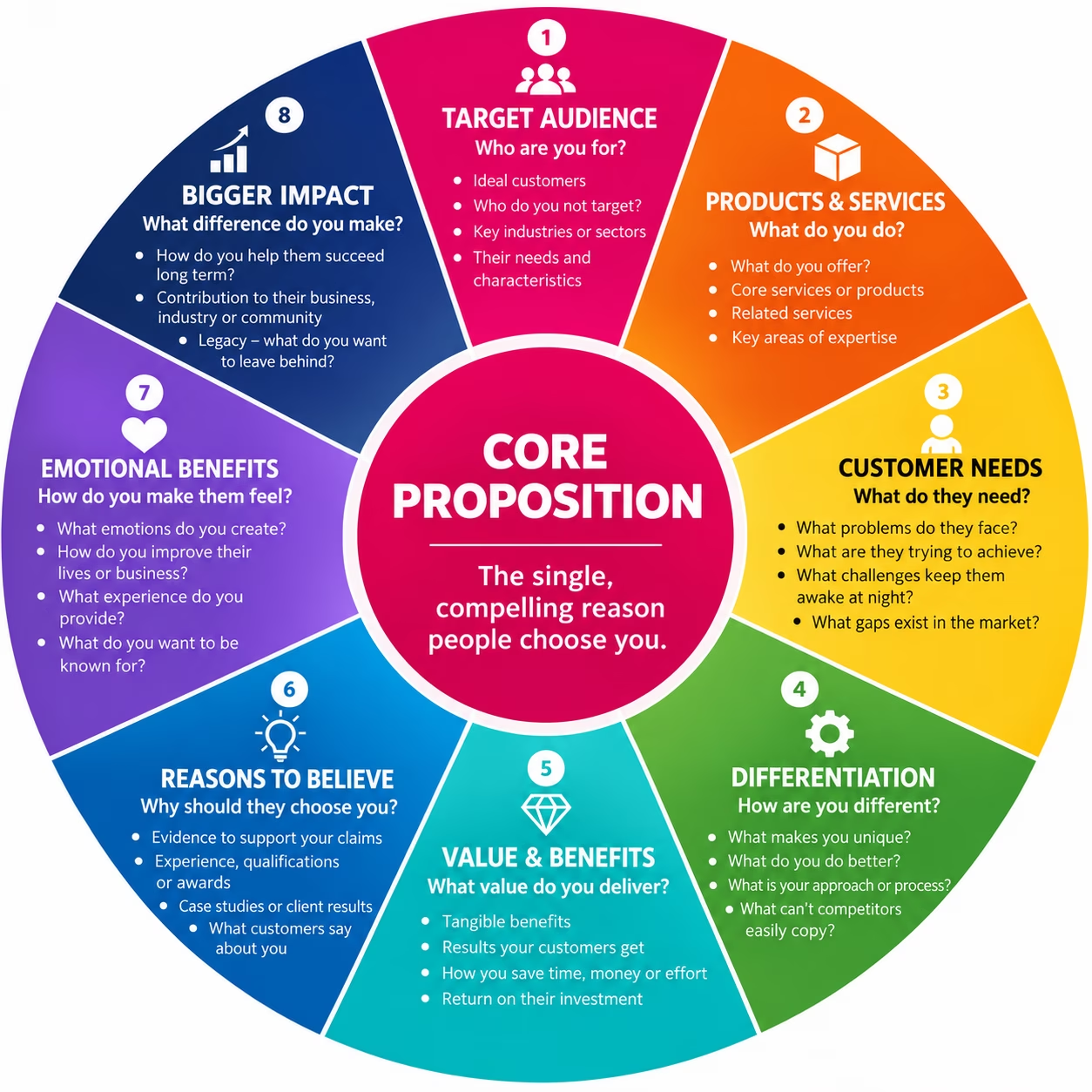
The important question isn’t: “What slogan can we make from these words?” It is: “What do these things collectively mean to our customer?” That change in thinking can produce a much stronger result.
A slogan should express an idea, not just a benefit
Many weak slogans simply state a benefit:
- Fast service.
- Great quality.
- Excellent customer care.
There is nothing inherently wrong with these statements, but they are difficult to own because competitors can say exactly the same thing. A stronger proposition gives the benefit some meaning.
For example, a print company might not simply want to say that it provides quality printing. Its real proposition might be about the creativity, knowledge, preparation and expertise that ensure printed work performs as intended. That creates so much more territory to explore.
The final words can then express the idea rather than merely describing the service.
Brevity matters – but don’t count words
Short slogans are generally easier to remember and easier to use. But there is no magic number of words that makes a slogan successful. Trying to reduce every slogan to three or four words can remove the very thing that makes it distinctive. The objective is economy, not simply shortness. Every word should earn its place.
If removing a word makes the proposition weaker, less distinctive or less understandable, it may not need removing. A good slogan should be as short as it needs to be – and no shorter.
Memorable doesn’t necessarily mean clever
There is a temptation to make a slogan witty. Sometimes that works. Sometimes it becomes a distraction. A clever phrase may get someone’s attention for five seconds but fail to communicate anything useful about the brand.
The better question is: Will people remember the idea, not just the words? A strong slogan can be simple. It can be direct. It can even appear obvious once you see it. That doesn’t mean it was easy to create. Often the difficult part is finding the simple expression of a much larger idea.
Originality is important
A slogan or tagline needs to distinguish one organisation from another. That means avoiding the endless collection of familiar marketing phrases:
- Quality you can trust
- Your success is our success
- Inspiring possibilities
- Making a difference
- The future starts here
- Solutions that work
These phrases may sound professional, but they have become so widely used that they rarely establish a distinctive identity. Originality doesn’t mean being obscure. It means finding a way of expressing a genuine proposition that belongs to the particular brand.
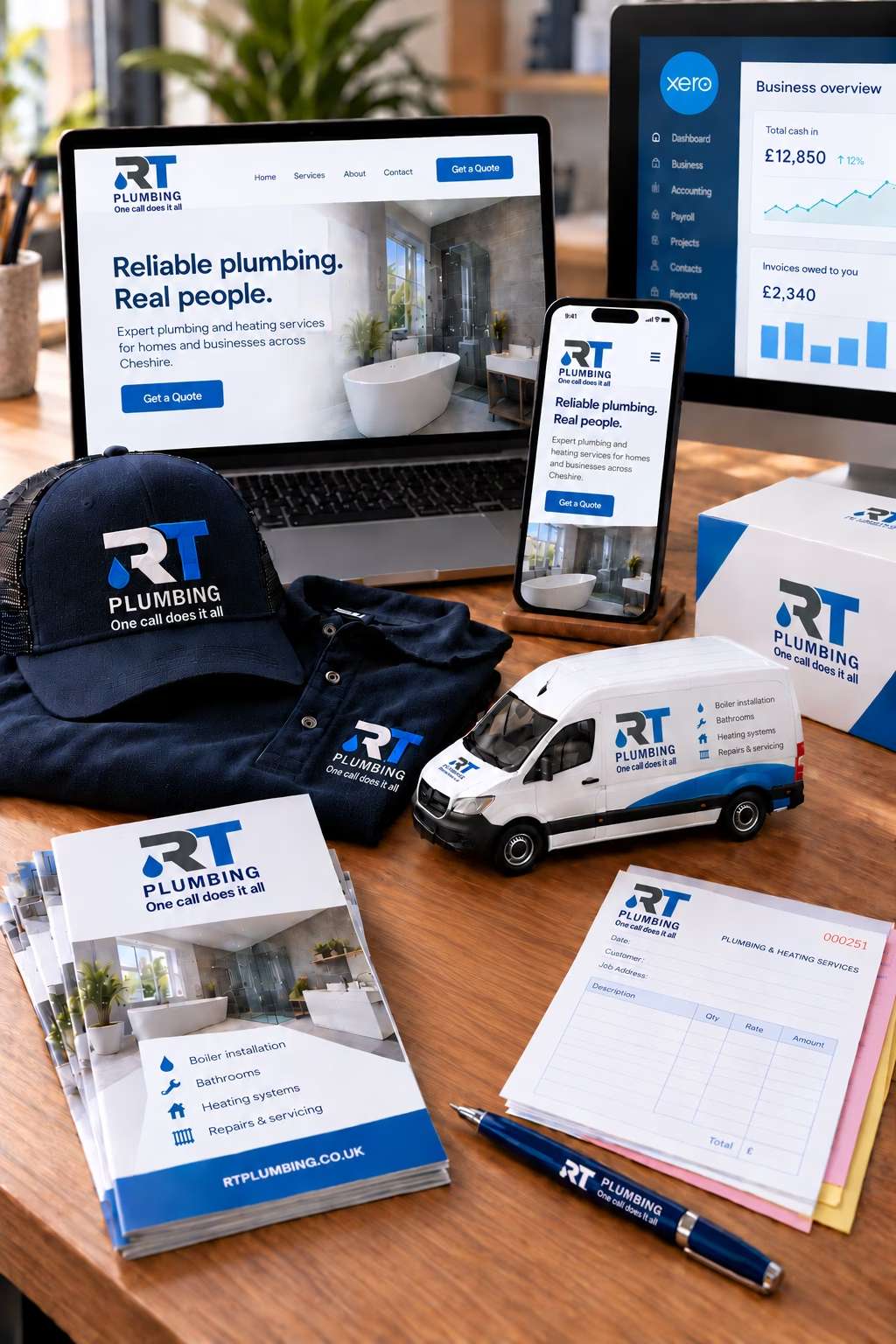
A slogan needs to work with the brand
A slogan rarely exists on its own. It may appear
- beneath a logo
- on a website
- on packaging
- on promotional items
- in advertising
- on a brochure
- on an exhibition stand
- on social media
- in presentations
- alongside photography
- within a longer piece of marketing copy
This matters. A phrase that looks impressive on a page of ideas may become awkward when placed beneath a logo. Another may work beautifully as an advertising headline but be inappropriate as a permanent brand tagline.
A slogan should therefore be tested in context, not just read as a sentence.
Don’t confuse a slogan with a headline
A headline and a slogan have different jobs. A headline can change from campaign to campaign. It is there to attract attention and encourage someone to read further. A tagline may remain with a brand for years.
That means a tagline generally needs to withstand repetition. If you intend to use the words for five or ten years, ask: Will this still represent the business when the current campaign, product or trend has disappeared? If the answer is no, you may have written a campaign headline rather than a brand tagline.
Where AI fits into slogan development
AI has changed the process of developing ideas. It can generate hundreds of slogan suggestions in seconds. It can explore different tones, identify alternative expressions, shorten phrases, combine concepts and challenge an initial idea. That makes it a useful creative tool.
But there is an important distinction: AI can generate words. It doesn’t automatically know which idea is the right one for your brand. If you ask AI:
“Give me 50 slogans for a graphic design company.”
you are likely to receive 50 perfectly reasonable slogans. You may also receive 50 slogans that could belong to almost any graphic design company. The problem isn’t the quality of the language. It is the lack of strategic context.
Give AI the thinking first
AI becomes much more useful when you give it something meaningful to work with. Instead of asking:
“Write me a slogan.”
give it:
- the company’s proposition
- its audience
- its personality
- its competitors
- what makes it different
- what it wants to be known for
- words and ideas to avoid
- examples of existing brand language
Then ask AI to explore the territory. It can produce alternatives that you may not have considered. It can expose clichés. It can challenge assumptions. It can suggest different ways of expressing the same proposition. But the final decision still requires judgement.
AI can help explore the territory. It shouldn’t decide where the brand is going.
Use AI as a creative partner, not a replacement for strategy
There is another useful role for AI. Ask it to attack your favourite idea.
- What could be misunderstood?
- Does it sound generic?
- Could a competitor use it?
- Does it communicate the intended proposition?
- Does it work without an explanation?
- Does it still make sense when placed beside the logo?
- This can be more valuable than simply asking for more alternatives.
The objective is not to produce the largest possible list of slogans. It is to arrive at the right idea.
A practical process
A useful approach is:
1. Understand
Learn about the organisation, its market, its customers and its ambitions.
2. Define
Establish the core proposition.
What is the one important idea the brand should own?
3. Explore
Develop a range of possible expressions. This is where brainstorming, writing, design thinking and AI can all be useful.
4. Distil
Remove the unnecessary. Look for the clearest, most distinctive expression of the proposition.
5. Test
Ask whether it is understandable, memorable, relevant and distinctive. Test it against competitors and in real applications.
6. Apply
Put it alongside the logo, on a website, in print and in advertising. A slogan doesn’t really exist until it works within the brand.
A real example
Consider the proposition behind a company with decades of experience in prepress, design and print. Its expertise might include:
Experience · Expertise · Design · Technology · Knowledge · Quality
Those words could produce countless possible slogans. But the more useful question is what those attributes collectively represent. The answer might be the knowledge and preparation that sits behind successful print. From that thinking, a much more distinctive statement can emerge:
There is no print without PrePress.
The strength of the idea isn’t simply the five words. It comes from the proposition behind them. It connects the company’s name with the essential preparation that happens before something is printed. That is the difference between writing a slogan and developing a brand proposition.
The final test
Before adopting a slogan or tagline, ask: Does it say something meaningful?
- Is it distinctive?
- Does it support the brand rather than simply describe the service?
- Will it still work in several years’ time?
- Does it work alongside the logo?
- Can a competitor say exactly the same thing?
- Does it work without a lengthy explanation?
- And perhaps most importantly:
- Does it express an idea that is genuinely yours?
If the answer to those questions is yes, you may have found more than a catchy phrase. You may have found a piece of the brand itself.
The important point
A slogan is only the visible part of the process. The real work happens before the words are written: understanding the brand, defining its proposition and deciding what it should mean to the people who encounter it.
Find the idea first. Find the words second.
Explore the world of PrePress