What is a brand and why does brand design matter?
A brand is much more than a logo.
It is the overall identity, reputation and perception of a business, product or service. It is what people recognise, remember and associate with your company — and it can have a significant influence on whether they choose to do business with you.
For that reason, brand design is not simply about making a business look attractive. It is about creating a clear and consistent identity that communicates who you are, what you offer and what makes you different. The American Marketing Association provides a useful definition of a brand and explains the relationship between branding, brand identity and brand positioning.
What is a brand?
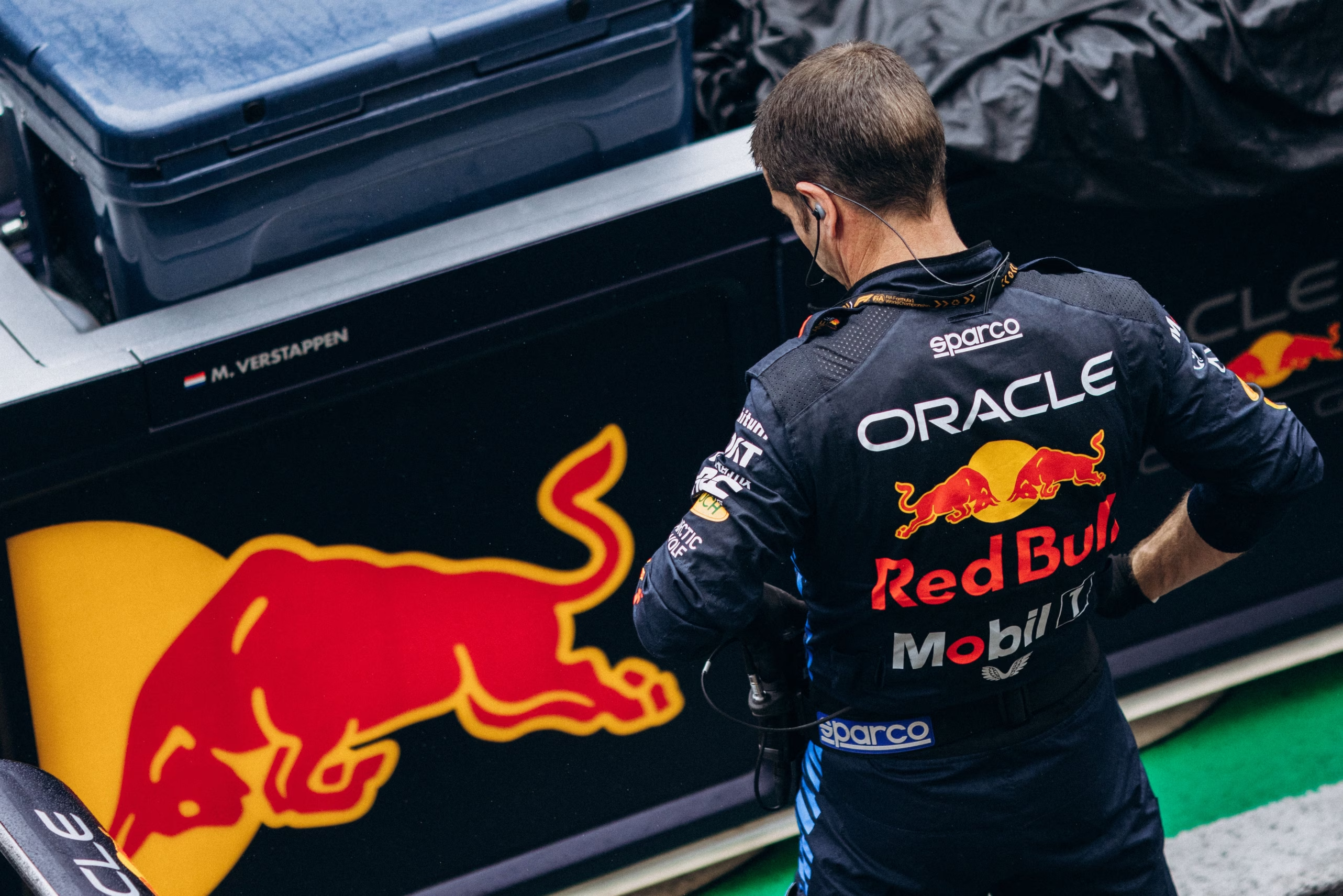
A brand is the collection of associations, experiences and perceptions that people have about a company, product or service. Your products and services are part of your brand, but so are the way you communicate, the way your business looks, the experience you provide and the reputation you build. Every interaction can contribute to your brand.Your website, advertising, packaging, stationery, vehicles, premises, social media, emails and printed literature all provide opportunities for people to form an impression of your business. Even the way you and your employees communicate with customers can influence that impression. A brand therefore exists well beyond the things you can design
.
Brand, brand identity and brand image are not the same thing
These three terms are often used interchangeably, but there is an important distinction. Brand is the broader concept — the overall set of associations and experiences surrounding a business, product or service.
Brand identity is the way a business deliberately presents itself. It includes the elements that the organisation can define and control, such as its name, visual identity, typography, colours, imagery, messaging, personality and tone of voice. Brand image is how the audience actually perceives the brand.
In simple terms:
Brand identity is what you want people to see and understand. Brand image is what they actually see, understand and remember. The two will not always be identical. A business can carefully construct its identity, but ultimately its reputation and image are formed through the experiences people have with it.
Why does brand design matter?
A strong brand gives a business something distinctive and recognisable. Think about how many companies operate in markets where their products or services are broadly similar to their competitors. In these situations, the brand can become an important part of the decision-making process. Good brand design can help a business.
Create consistency
Customers may encounter your business in many different places – your website, social media, an advertisement, a brochure, an email or a vehicle. When these touchpoints use the same visual and verbal language, they reinforce one another and make the business easier to recognise.
Consistency does not mean that everything has to look identical. It means that the different parts of your communications should feel as though they belong to the same organisation.
Communicate professionalism
People form opinions quickly. A considered and professionally implemented brand can communicate that a business takes its products, services and customers seriously. Conversely, inconsistent or poorly executed communications can undermine an otherwise excellent business.
Brand design cannot compensate for a poor product or service, but a good product or service can be poorly represented by an inadequate brand.
Differentiate your business
In a crowded marketplace, being recognised is only part of the challenge. Your brand also needs to communicate why your business is different or relevant. A distinctive identity can help separate your business from competitors, particularly where customers have difficulty comparing products or services on purely functional features.
Build an emotional connection
People do not always make purchasing decisions based solely on rational considerations. Brands can create associations and feelings around a business. Personality, imagery, language, colour and the customer experience can all contribute to how people feel about an organisation. This is particularly important when several businesses offer broadly similar products or services.
A brand is not just a logo
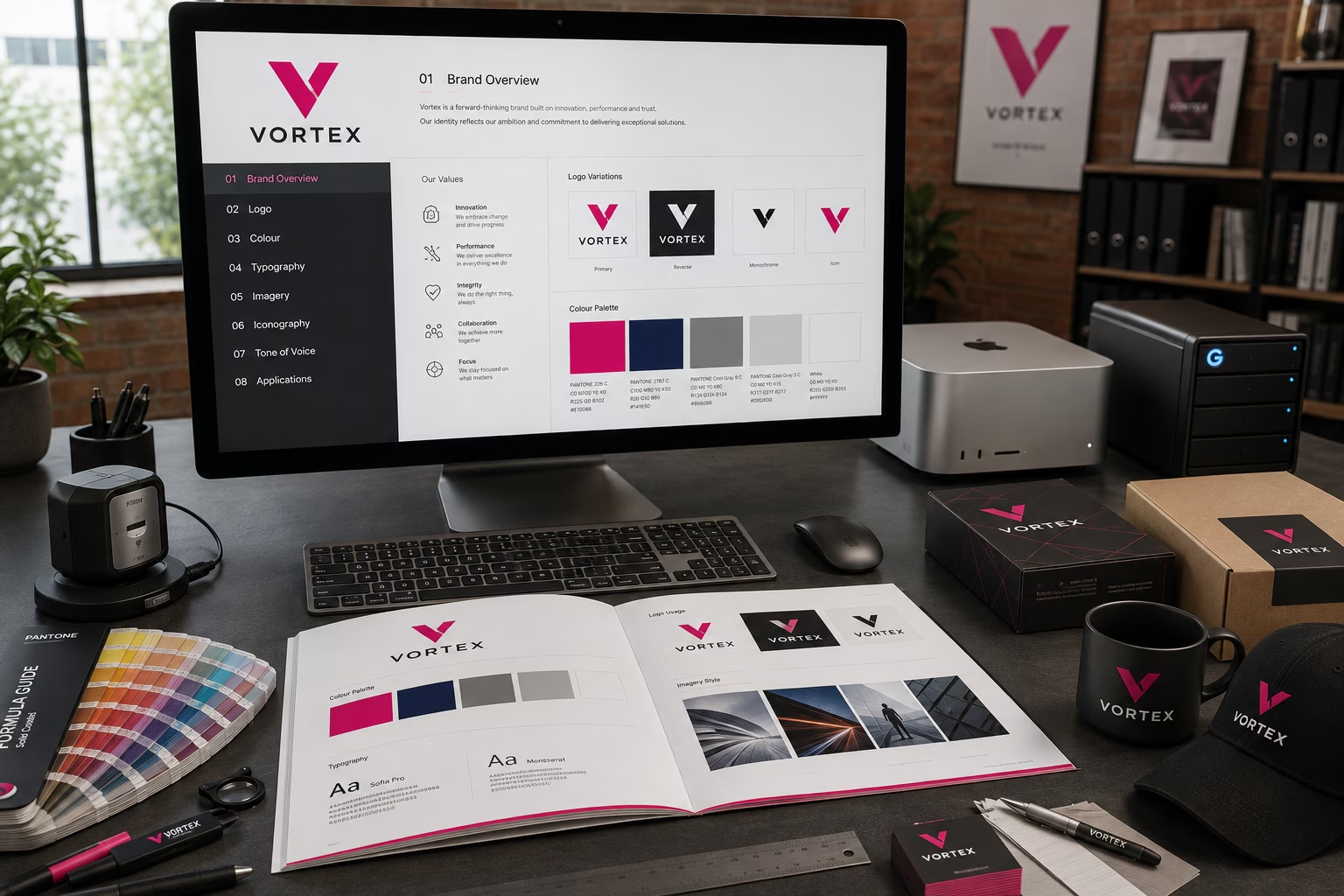
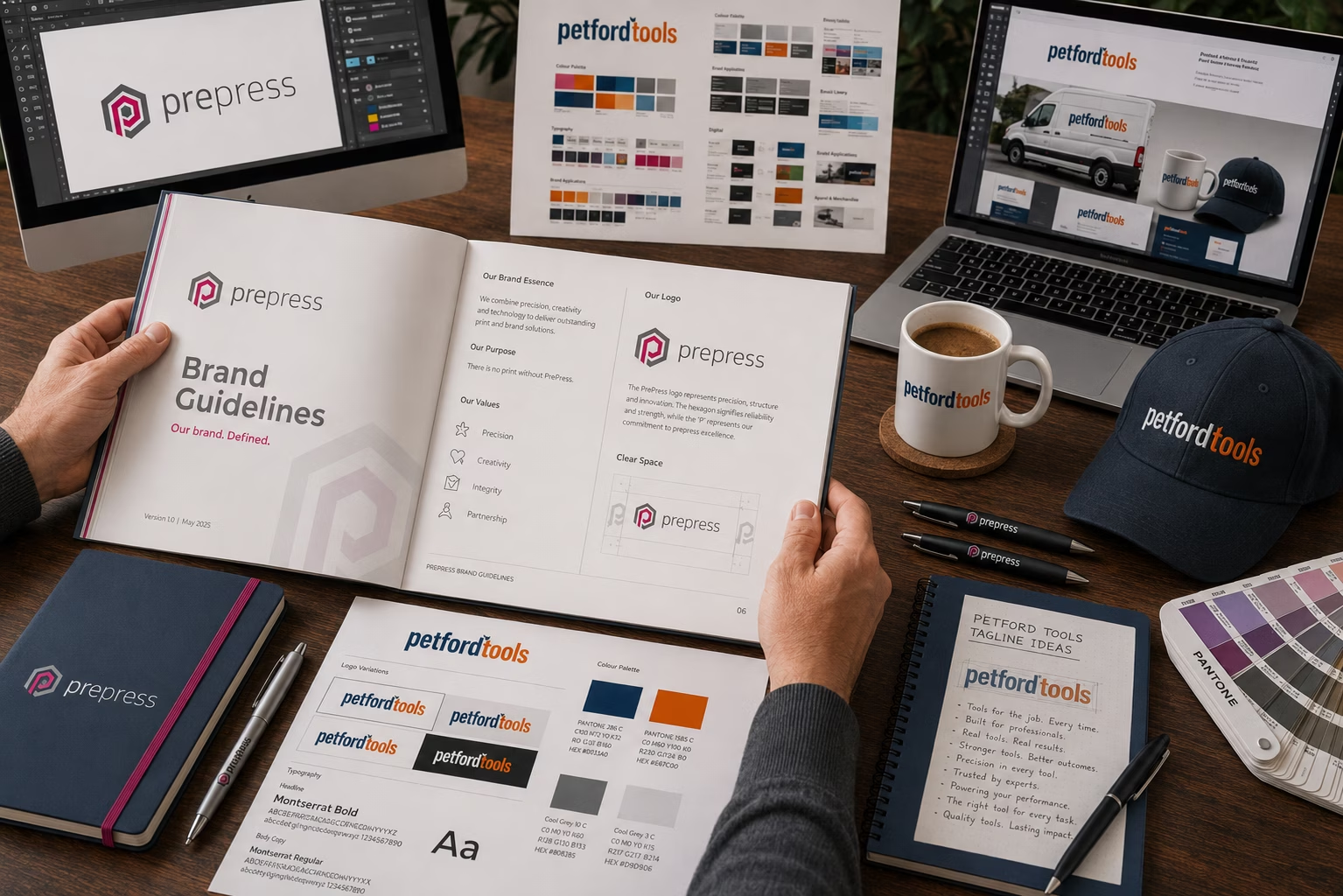
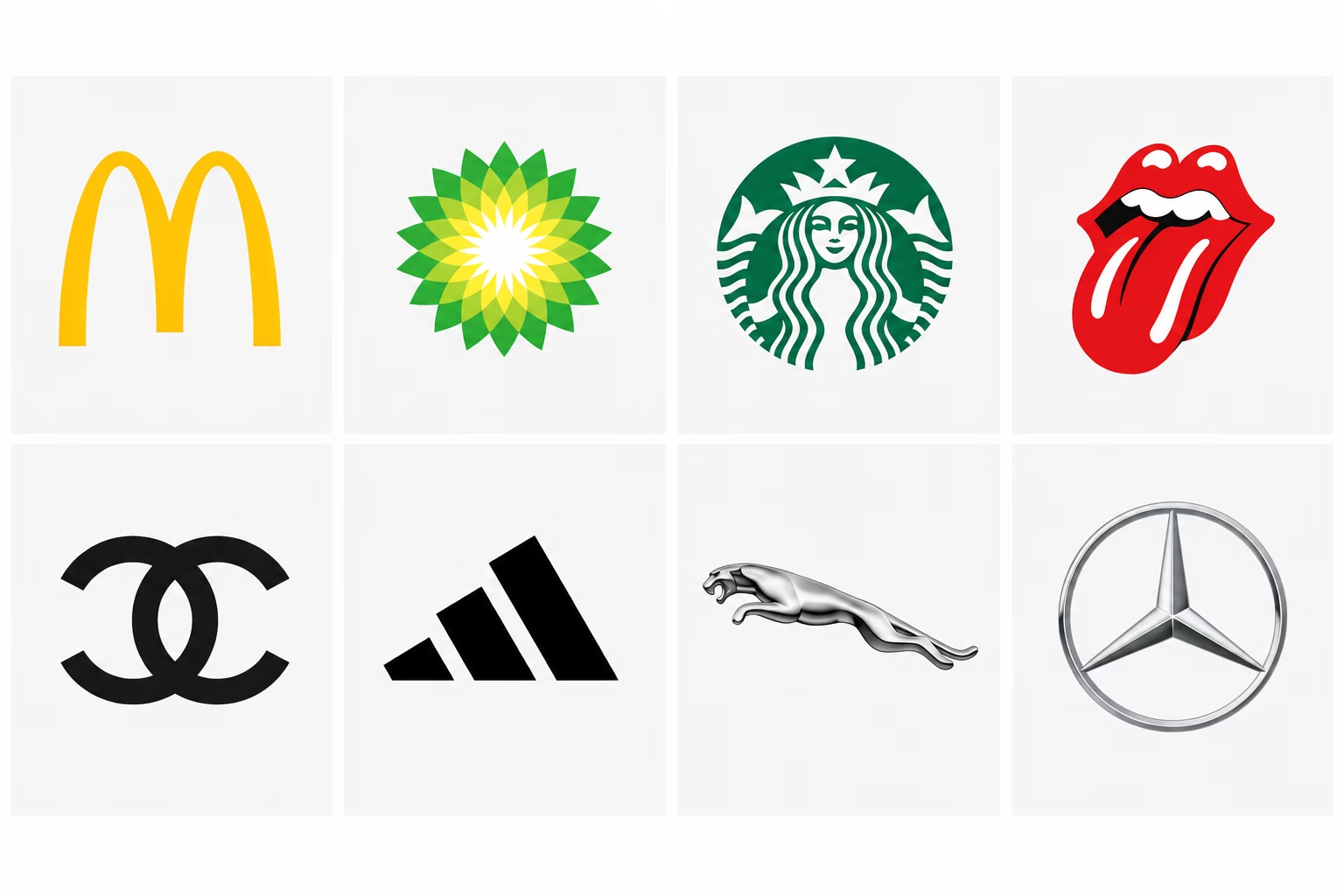
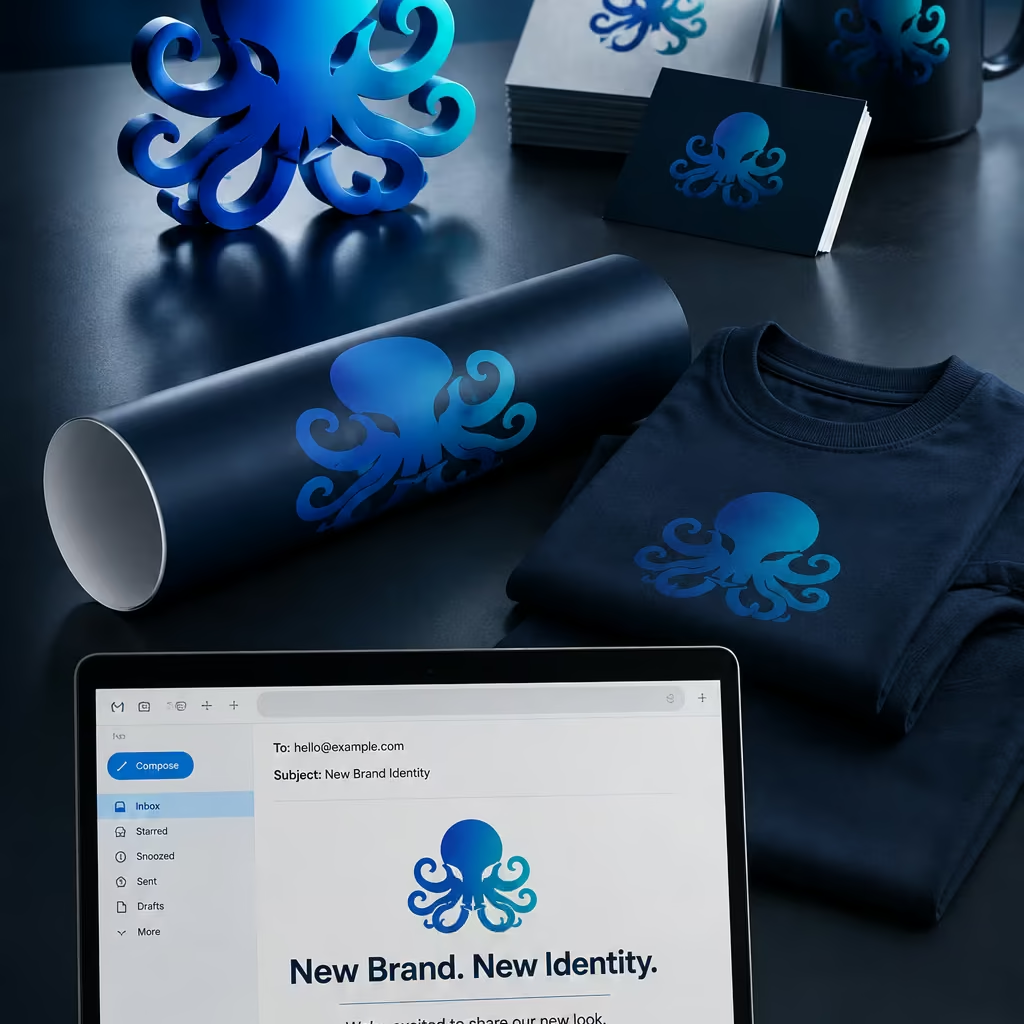
One of the most common misconceptions about branding is that the logo is the brand. It isn’t. A logo is an important identifier, but it is only one component of a brand identity. A complete visual identity may include:
- Logo and logo variations
- Colour palette
- Typography
- Photography and imagery
- Graphic elements
- Layout and design principles
- Packaging
- Signage
- Stationery
- Advertising
- Website and digital communications
- Social media
- Printed literature
Build recognition
A distinctive and consistently applied identity makes it easier for people to recognise your business.
A logo is part of this, but it is only one element. Colour, typography, imagery, layout, packaging, signage and other visual cues can all contribute to recognition.
These elements work together to create a recognisable visual language. But even this is only part of the picture. A brand also has a verbal and behavioural dimension.
Brand personality and tone of voice
If a brand were a person, how would you describe its personality? Professional? Approachable? Innovative? Traditional? Energetic? Serious? Friendly?
Defining this personality helps determine how the business communicates. Tone of voice affects the words you use, the way you write and the way you communicate with your audience. A financial organisation may need a very different tone from a children’s entertainment company, for example.
The important thing is that the personality and tone should be appropriate to the business and its audience rather than simply following the latest design trend, this is important when it comes to defining What is Brand.
Your products and services are part of your brand
There is little value in creating an impressive visual identity if the actual experience does not live up to it. Your products and services are part of your brand because they are among the things customers experience directly. Quality, reliability, customer service, delivery, after-sales support and the overall customer experience all influence how people perceive your business.
This is why branding cannot be treated purely as a graphic design exercise. The visual identity makes a promise; the business has to deliver on it.
Branding is important for small businesses too
Branding is sometimes seen as something reserved for large companies with substantial marketing budgets. It isn’t. Even a small business or sole trader has a brand, whether it has deliberately created one or not. You may already have a logo, particular colours, a website, a vehicle, workwear, business cards, social media accounts and a particular way of communicating with customers.
Those things are already contributing to how people perceive your business. The question is therefore not whether you have a brand. You already do. The question is whether you are managing it deliberately.
A small business does not necessarily need an elaborate corporate identity programme. Sometimes relatively simple improvements — such as consistent typography and colours, professional stationery, vehicle graphics, signage or a properly designed website — can make a substantial difference.
Brand purpose can influence behaviour
A brand can also stand for something beyond the products or services it sells. Research by Zeno Group found that 82% of consumers surveyed had taken some form of action to support a company when they believed in its purpose. The research included actions such as recommending the company to others and beginning to buy from it.
This does not mean that every business needs to invent a grand social purpose. It does, however, demonstrate that what a company stands for can matter to its audience. The most convincing brands are those where their stated values are reflected in what they actually do.
Brand design is about more than making things look good
Good brand design should make a business easier to recognise, understand and remember. It should provide a consistent framework for communicating across different media while allowing the business to develop over time.
Most importantly, it should be appropriate to the business. A successful brand is not necessarily the loudest, most fashionable or most complicated. It is one that accurately represents the organisation, connects with the right audience and provides a distinctive and consistent presence.
The bottom line
Your brand is one of the most valuable assets your business develops over time. It is built through every interaction customers have with you — not just through your logo.
Brand identity gives you the tools to control how your business presents itself. Brand image is the perception that develops in the minds of your customers.
Good brand design brings these elements together, creating a clear and consistent identity that can help your business become recognised, trusted and differentiated.
Your brand is what people remember about your business when you are not in the room.
And that makes brand design considerably more important than simply choosing a logo and a colour scheme.
Written by Steve Sankey. PrePress. First published 2004. Update September 2026
Explore our Knowledge base
Explore the world of PrePress

The Future of PrePress
Essential reading for the graphic and print industry.

The best alternatives to Pantone colours
There are more than you think
What resolution should a logo be?
We explain the rules in depth