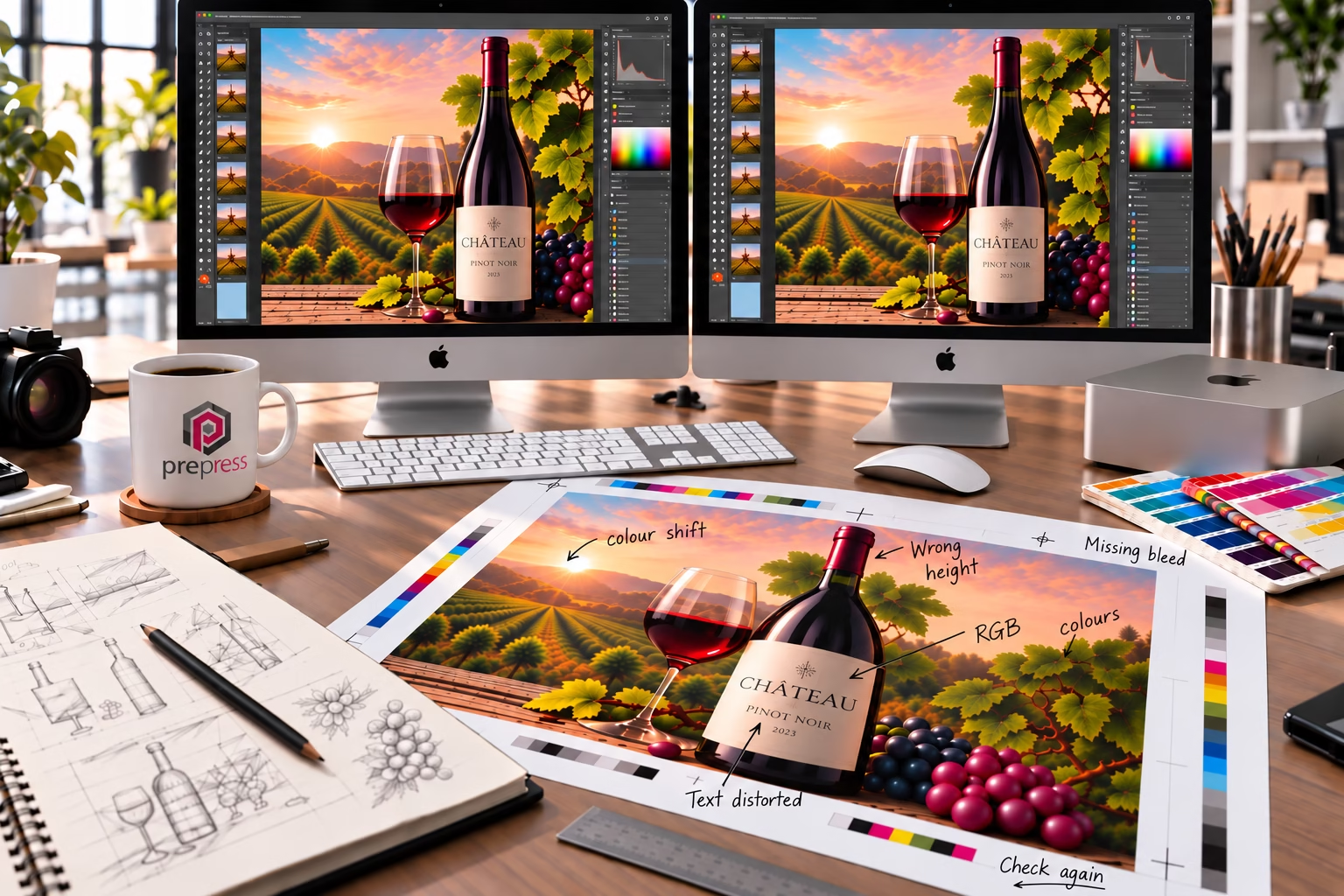
AI cannot design for print
Why AI cannot be relied on for print and how to overcome the problem
Fawlty Towers was a short sitcom that, for many, was pure genius. Basil Fawlty is a flawed genius, constantly trying to be the best and failing, then attempting to cover up his mistakes. The show perfected the comedy of escalation and it is widely considered a masterpiece of British comedy, where a small, trivial misunderstanding snowballs into absolute chaos as panic takes over. Welcome to AI.
AI can generate impressive advertising images, illustrations and visual concepts in minutes. But getting that artwork ready for print is where we descend into frantically bashing the keyboard, trying to articulate an obvious error into words that might somehow restore normality. Sometimes, it feels easier to learn Mandarin.
Can AI create a complete flyer for print?
No. Not reliably. And, frankly, why would you want it to
If you are charging a customer for professional design, you need to deliver artwork that you can control, edit and prepare properly for production. You cannot always open an AI-generated file and manipulate individual elements as you would in professional design software. Fonts may be questionable, images may contain errors, and the overall composition may lack the precision required for professional work.
For a local club producing a digital screen graphic or social media images, AI can be an excellent solution. But when it comes to producing high-quality, professional print artwork, AI alone is not enough.
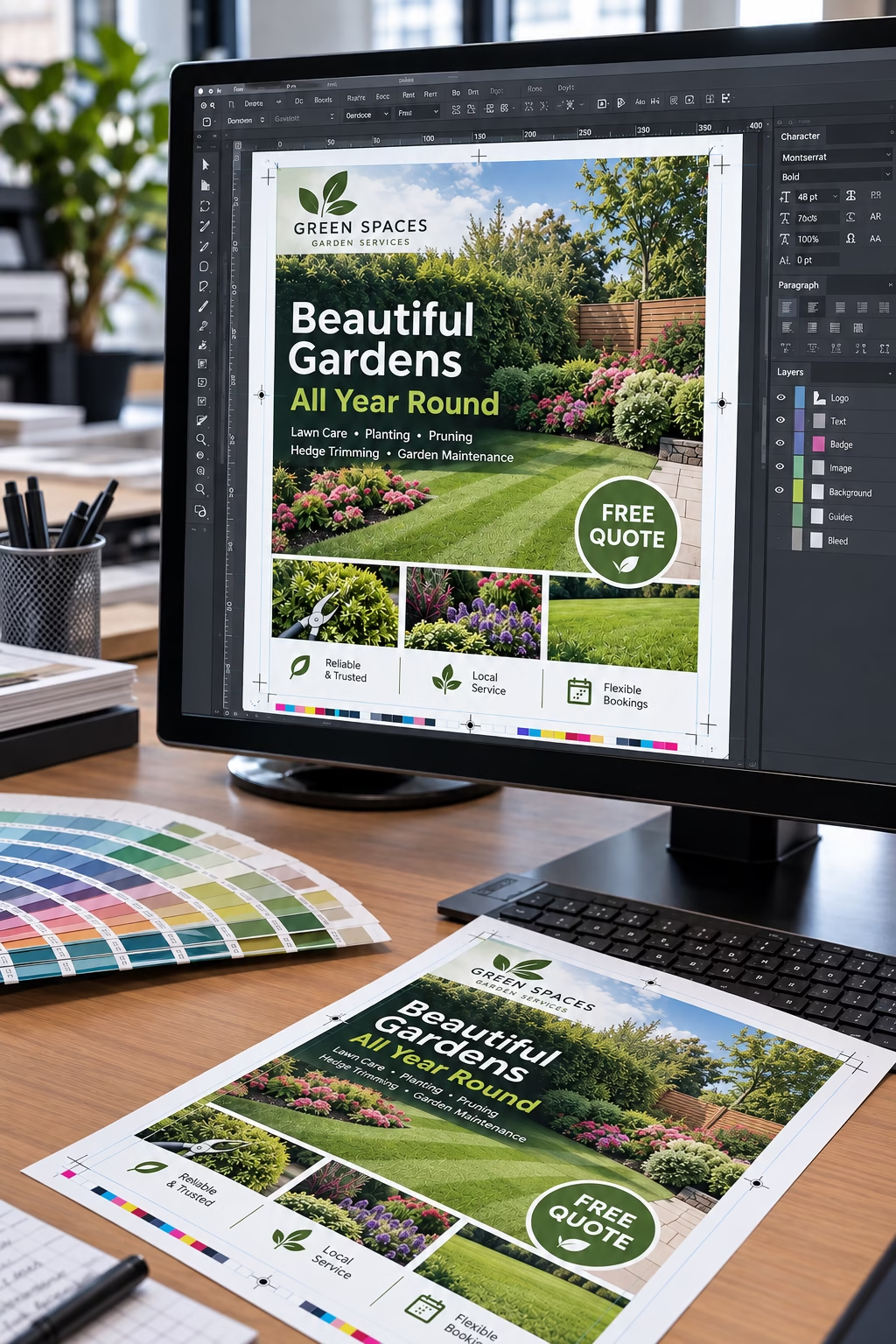
AI generates artwork that often cannot be edited; Poor typography, images have error, logos are not correctly generated. And trying to get a simple change from AI becomes sooooo stressful. Move an item 2mm it disappears. Your 16:1 image becomes 1:1. A nightmare, where you question if your actually in Fawlty Towers. And that is before ensuring the artwork is correct for press.
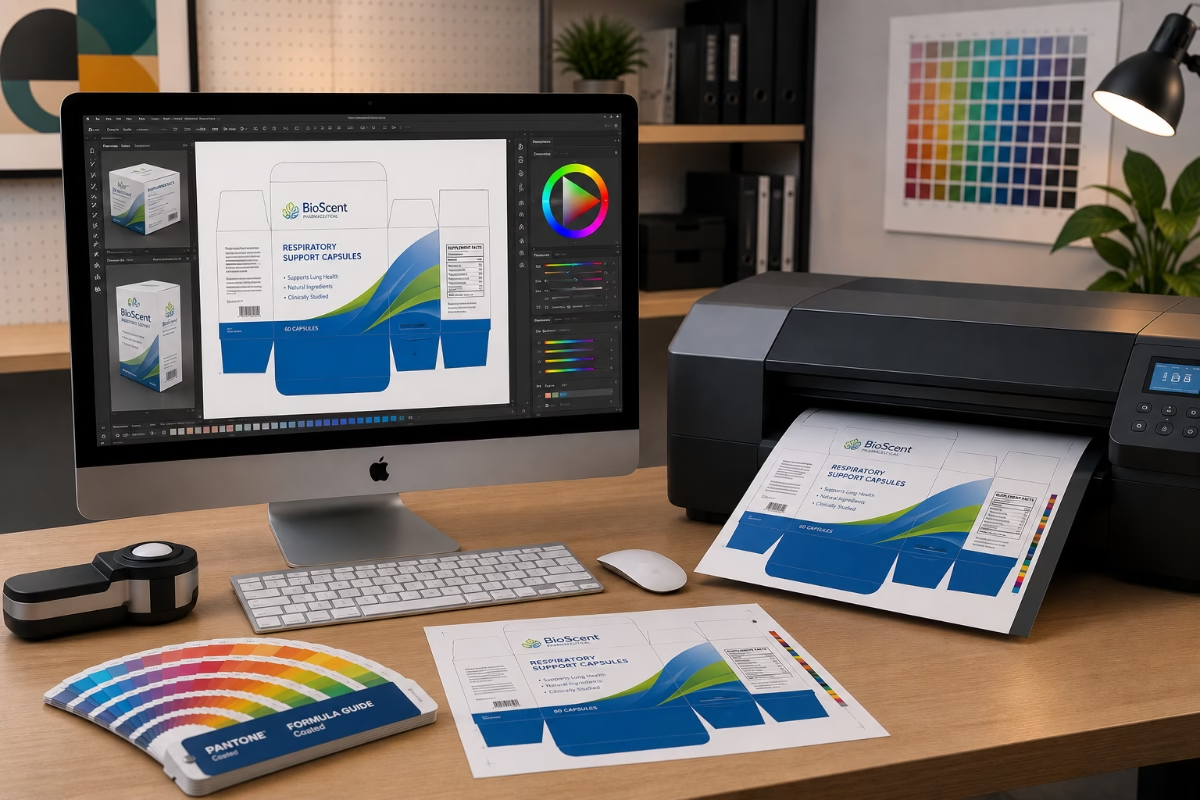
For professional work, it is far more effective to separate image generation from page layout. Use AI to create the visual assets, then bring everything together in your preferred design application, where you can control the typography, branding, positioning and final composition and completely control the artwork for print production.
This way of working is essential for anything that requires accurate, production-ready print artwork. It also gives you greater control over the finished design and avoids relying on AI to make decisions that require precision. Editable artwork is particularly important when last-minute changes are required, when designs need updating regularly, or when variable data must be incorporated. By breaking down the elements you can concentrate on getting each element is correct.
A matter of trust
AI tools may confidently tell you they can produce finished artwork, and the results can look remarkably convincing. However, every result needs to be examined carefully. There are still too many potential errors to allow AI to take complete control of professional artwork production yet alone use it to send to print.
AI generated files often contain errors, inaccuracies and misleading information, so you should never assume that something is correct simply because it looks convincing or because the AI tool says it is. A visually convincing design is not necessarily a dependable production file, and it may be unsuitable for print.
Everything needs to be checked. AI can produce obvious errors, including spelling mistakes, poor typography, distorted logos, badly generated images and inaccurate content. But some of the most significant problems lie behind the design itself. Individual elements may not be independently editable. Image resolution may be insufficient, colour settings may be inappropriate, images may be in RGB, and the artwork may lack bleed or have incorrect dimensions.
Common errors in AI generated artwrok
(ha, this error is humour, something AI can struggle with, too)
AI cannot fully appreciate the chaos of Fawlty Towers. Its brilliance lies in the journey each episode takes towards utter madness. It is the escalating absurdity, the awkward silences, the misunderstandings and the characters’ reactions that make the comedy so memorable.
This is where AI can fall short. Shared experience, sarcasm and irony are difficult to reproduce convincingly without a proper understanding of the context. AI does not possess human consciousness or lived experience, even when it can convincingly imitate the way people talk about them.
Every person is different. Every experience is different. And that is part of what makes human creativity so valuable. AI can does not have your experiences, the fail to grasp human emotions, wit, sacrarium all elements that make a creative concept work. This is important as you need to bear this in mind when writing your brief.
Why you and AI can struggle with your brief
- Unfamiliar wordplay: AI may recognise familiar puns and jokes but struggle with original wordplay, unexpected phrases and unusual combinations of meaning. Research into humour and language models has explored these limitations, although results vary considerably between tests and models.
- Lack of lived experience and empathy: Humour often relies on human vulnerability, embarrassment, relationships, real-world context and emotional timing. AI can describe these experiences, but it does not experience them as a human does.
- Cultural references and subtext: Subtlety, sarcasm and cultural in-jokes require an appreciation of context. AI may interpret language too literally or fall back on familiar clichés.
- Pattern matching rather than human understanding: AI generates responses based on patterns learned from data. It can reproduce familiar comedic structures without necessarily capturing why a particular joke works or why an unexpected moment is funny.
- The Oversight Paradox: People are so inspired with the AI results they forget their critical evaluation standards, and drop the ball. They accept inaccurate or superficial information without conducting the normal verification procedures.
So why are we telling you this?
Because many of our most memorable slogans, advertisements, television commercials, posters and logos have come from human experience. They have been created through humour, experimentation, pressure, deadlines, collaboration and sometimes sheer chaos.
Here you are asking a computer program to communicate an idea that may depend on experiences it has never personally seen, smelt, heard or touched. AI can draw on descriptions of human experiences and produce creative work inspired by them. But there is a difference between generating something that looks creative and understanding the human experience behind the idea. That difference matters when the success of a design depends on originality, emotional impact and knowing exactly what will make an audience respond.
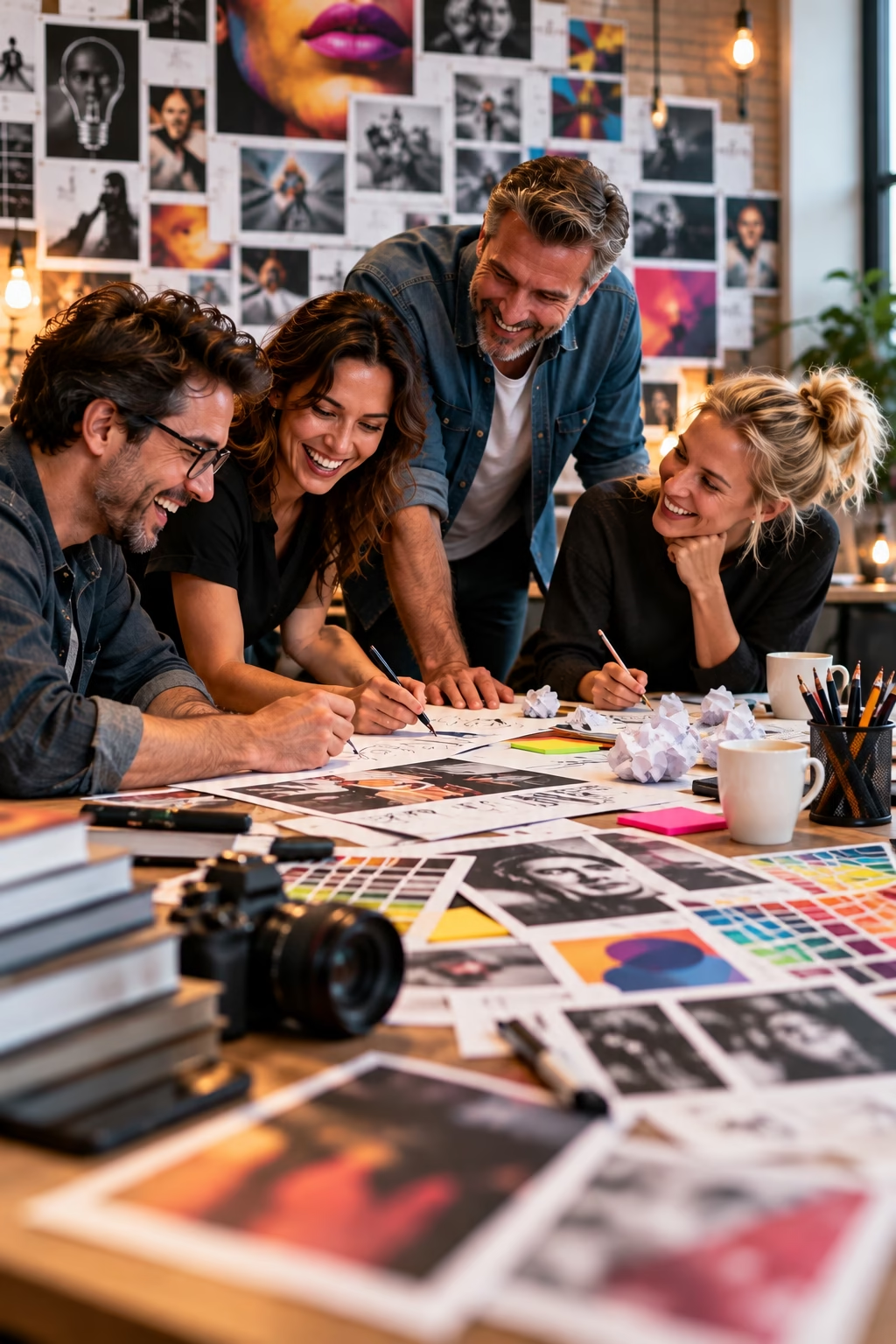
Will app programs like InDesign and Photoshop become obsolete?
Current AI tools are excellent at generating rough concepts from scratch, but they can still struggle with precise control, exact measurements and minor alterations.
If you ask an AI tool to move a specific line two millimetres to the left or change only the font weight of the third word, it may regenerate the entire image or misinterpret the layout rather than make the precise adjustment you requested. This limitation is one reason applications such as Adobe Photoshop, Illustrator and InDesign remain important to professional designers.
Professional design requires control over individual pixels, vector paths, text boxes, image placement, colour settings and page dimensions. These are not simply aesthetic considerations; they are essential to producing reliable artwork. As you may have noticed, professional design applications have increasingly incorporated AI into their core features. These tools are there to assist the designer, speed up certain tasks and expand creative possibilities – not to remove the need for professional judgement.
The important distinction is between generating an image and preparing a complete, editable document that meets a printer’s production requirements.
You still need a designer to put the artwork together
The fact that AI cannot design for print is perhaps the good news for many graphic designers; that AI-generated elements still need to be selected, refined, checked and incorporated into properly constructed artwork. AI can be a valuable addition to the creative process. It can help generate ideas, explore visual directions, create text, illustrations and speed up certain repetitive tasks. But professional design involves far more than producing an attractive image.
The designer becomes the director, bringing together the brief, the brand, the audience, the typography, the layout and the technical requirements. They also take responsibility for checking the finished artwork before it goes to print. For the foreseeable future, the combination of AI tools and professional design skills offers a more dependable approach than relying on AI alone.
Explore the Word of PrePress