UV coating vs lamination
Print finishing can transform the appearance and durability of printed materials. The right finish can enhance colour, add gloss or a soft matt appearance, reduce scuffing and help protect a printed surface during handling. Choose the wrong one, however, and the result may not meet expectations.
Varnish, UV coating, aqueous coating and lamination are not interchangeable. Each works differently, and the best choice depends on the printed product, the paper or board, how it will be used and the finish you want to achieve.
This guide explains the differences between the main print finishing options, their advantages and limitations, and what to discuss with your printer before production.
| Finishe | How it works | Main benefit |
|---|---|---|
| Conventional print varnish | A liquid coating applied to the printed surface | ppearance and light protection against rubbing |
| UV coating | A liquid coating cured using ultraviolet light | A hard, durable surface with strong visual effects |
| Aqueous coating | A water-based coating that dries after application | Practical protection against everyday scuffing |
| Film lamination | A thin film bonded to the printed surface | Enhanced protection against moisture, handling and wear |
These are general comparisons, not absolute rules. Performance varies with the specific product, substrate, application and finishing process.
Machine sealing or overprint varnish (OPV)
Whilst technically not a varnish machine sealing is still important in this context as it is applied on press. Machine sealing is the application of a thin, usually virtually invisible protective coating to printed sheets. It can be applied in-line as part of the printing process or off-line after printing.
The coating helps protect the printed surface against scuffing, marking and handling damage. It can also help printed sheets withstand handling sooner, reducing the risk of ink transferring or marking adjacent sheets during stacking and finishing. The degree of protection depends on the coating used, the paper and the printing conditions.
Machine sealing is particularly useful for fast-turnaround work, including leaflets printed on matt and satin-coated papers, where drying and handling can present challenges. It is also beneficial on areas containing heavy coverage of black or other dark inks, where fingerprints and scuff marks can be especially noticeable.
Protective coatings are also commonly used on magazine covers, reports, brochures and other printed materials that are likely to experience frequent handling.
Machine sealing should not be confused with lamination, which applies a separate film to the printed surface. Nor should it automatically be treated as a distinct coating chemistry: the term describes the application or protective purpose of a coating, and the precise terminology can vary between printers and processes.
Liquid coatings are widely used to provide light to medium protection at a relatively low cost. The principal coating types used in print production include aqueous coatings, conventional oil-based varnishes and UV coatings, each with different characteristics, application methods and finishing possibilities.
What is print varnish?
Print varnish is a clear liquid coating applied over printed ink. Depending on the formulation and process, it may be applied through a printing unit or by separate coating equipment.
Varnish can change the appearance of a printed sheet and help reduce rubbing and scuffing. It is available in finishes such as gloss, satin and matt.
A varnish may cover the whole printed surface, known as a flood coating, or be applied selectively where the equipment and process permit.
When is conventional varnish useful?
- When a subtle surface finish is required.
- When some protection against rubbing is sufficient.
- When the appearance of the printed piece needs to be adjusted without adding a film.
- When the printing process and production specification make varnish a suitable, economical option.
Varnish is not a universal solution for protecting heavily handled print. Its resistance to abrasion, moisture and chemicals depends on the formulation and application.
2. What is UV coating or UV varnishing?
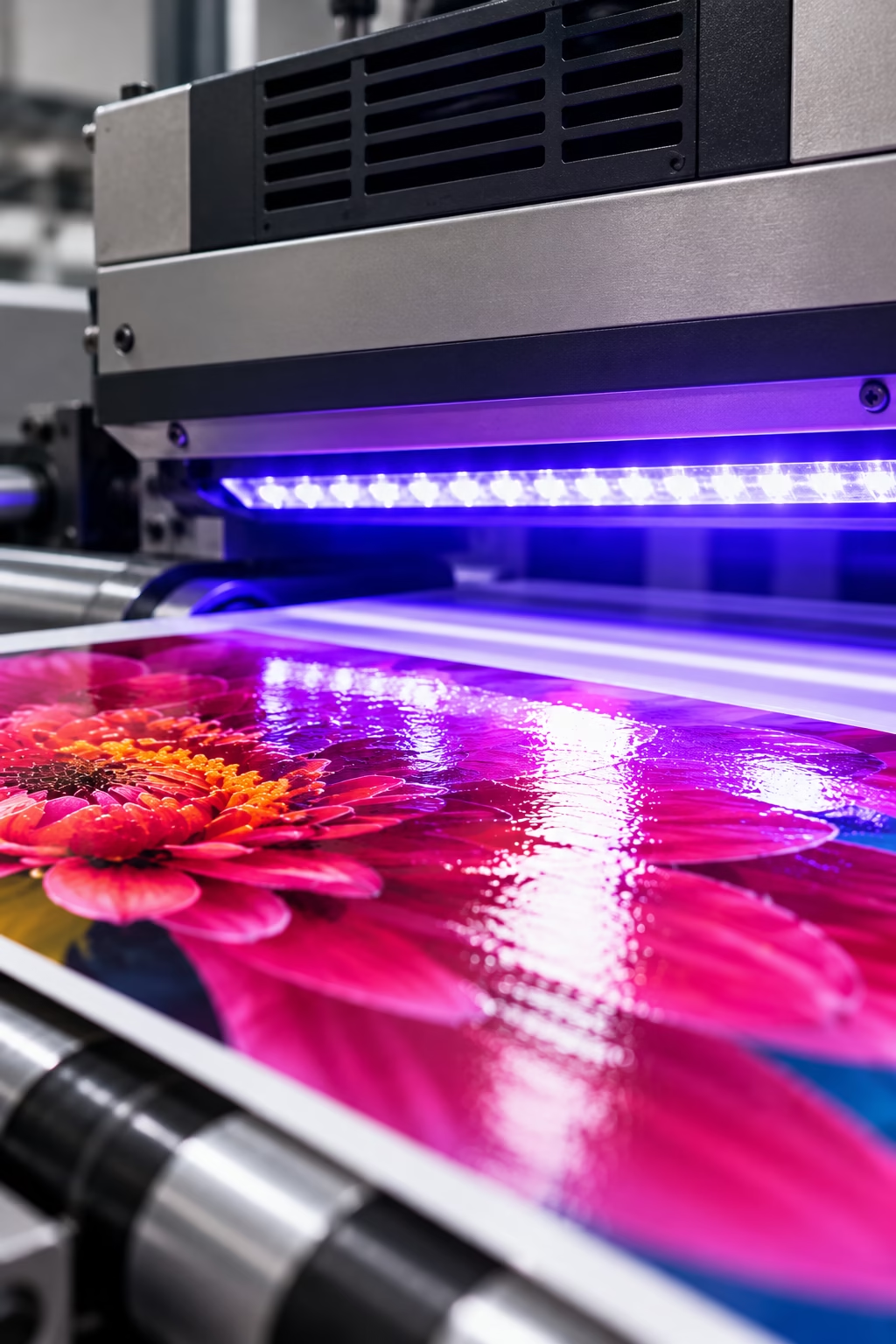
UV coating is a liquid coating that is cured using ultraviolet light. The light triggers a chemical reaction that hardens the coating, rather than relying solely on conventional drying.
The terms UV coating and UV varnish are often used for the same general type of print finish. UV coating is not the same as UV printing, which refers to a printing process using inks cured by ultraviolet light.
UV coatings can produce a range of effects, including gloss, matt and specialist textured finishes. They can also offer good resistance to scuffing and scratching when the correct coating is selected and properly applied.
What is flood UV coating?
Flood UV coating covers the whole intended surface. It can give printed photographs, illustrations and solid colours a pronounced finish, depending on the coating and substrate.
What is spot UV coating?
Spot UV applies the coating only to selected areas of the design. For example, a logo, photograph or heading might receive a glossy finish while the surrounding area remains matt. This contrast can create an effective visual result on business cards, brochures, presentation folders, packaging and book covers.
<em>Important:</em> UV coating is not suitable for every application. Some coatings can crack when a sheet is folded or creased, particularly if the coating is thick or the job is poorly specified. Folding, creasing, adhesion and any subsequent finishing operations should be discussed with the printer.
3. What is aqueous coating?
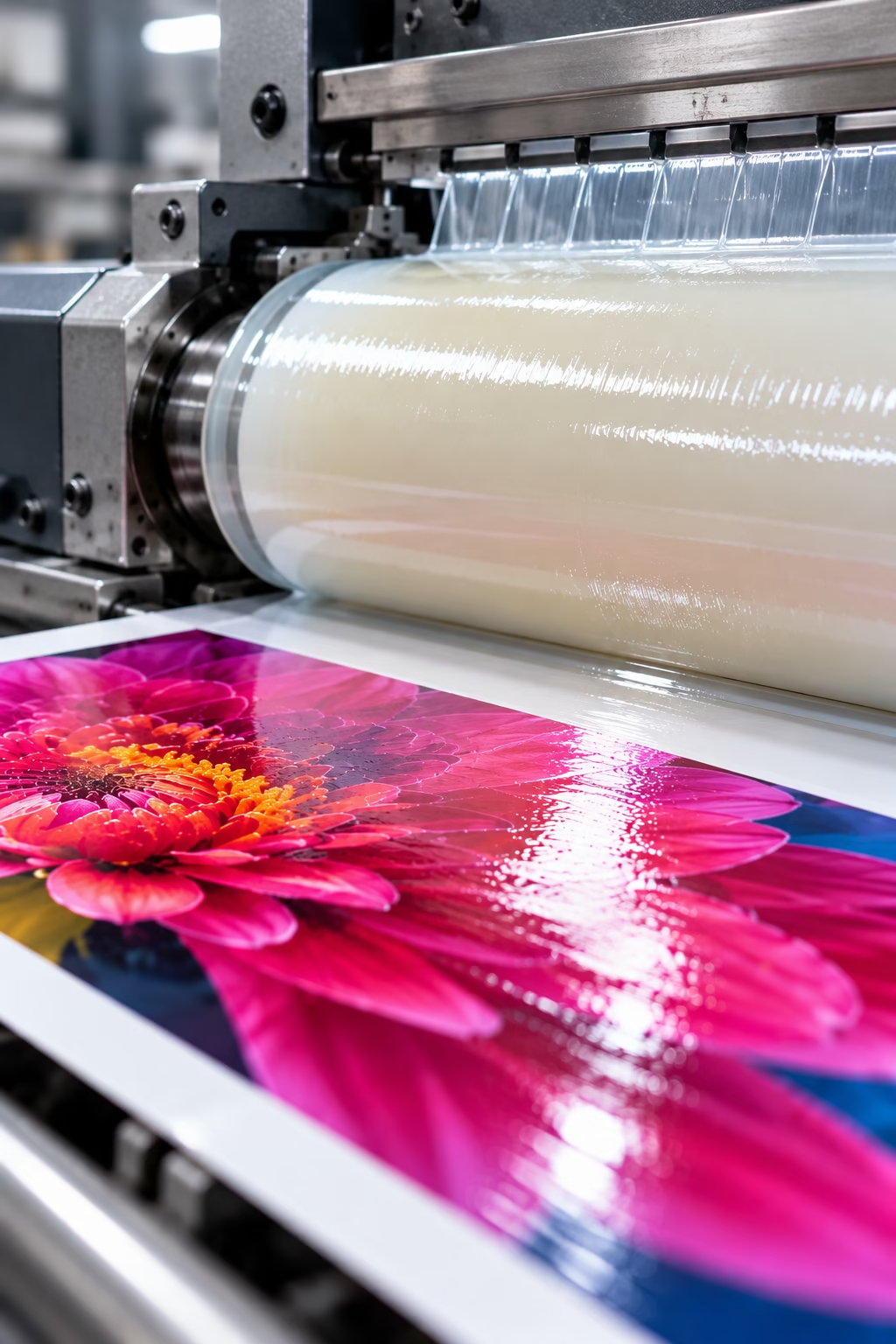
Aqueous coating, often shortened to AQ coating, is a water-based coating applied to printed material and dried after application. It is commonly used in commercial printing and packaging.
Depending on the product, it can provide gloss, satin or matt finishes, with protection against everyday rubbing and scuffing.
Aqueous coating is often used where a practical surface finish is required without the addition of a plastic film. It can also support efficient production when the press and finishing equipment are configured for it.
When is aqueous coating useful?
- Brochures, leaflets and catalogues.
- Printed packaging and folding cartons.
- Jobs requiring a practical balance of appearance, handling protection and production efficiency.
Aqueous coating is not waterproof, and its performance should not be assumed to match that of a film laminate or every UV coating. The exact specification matters.
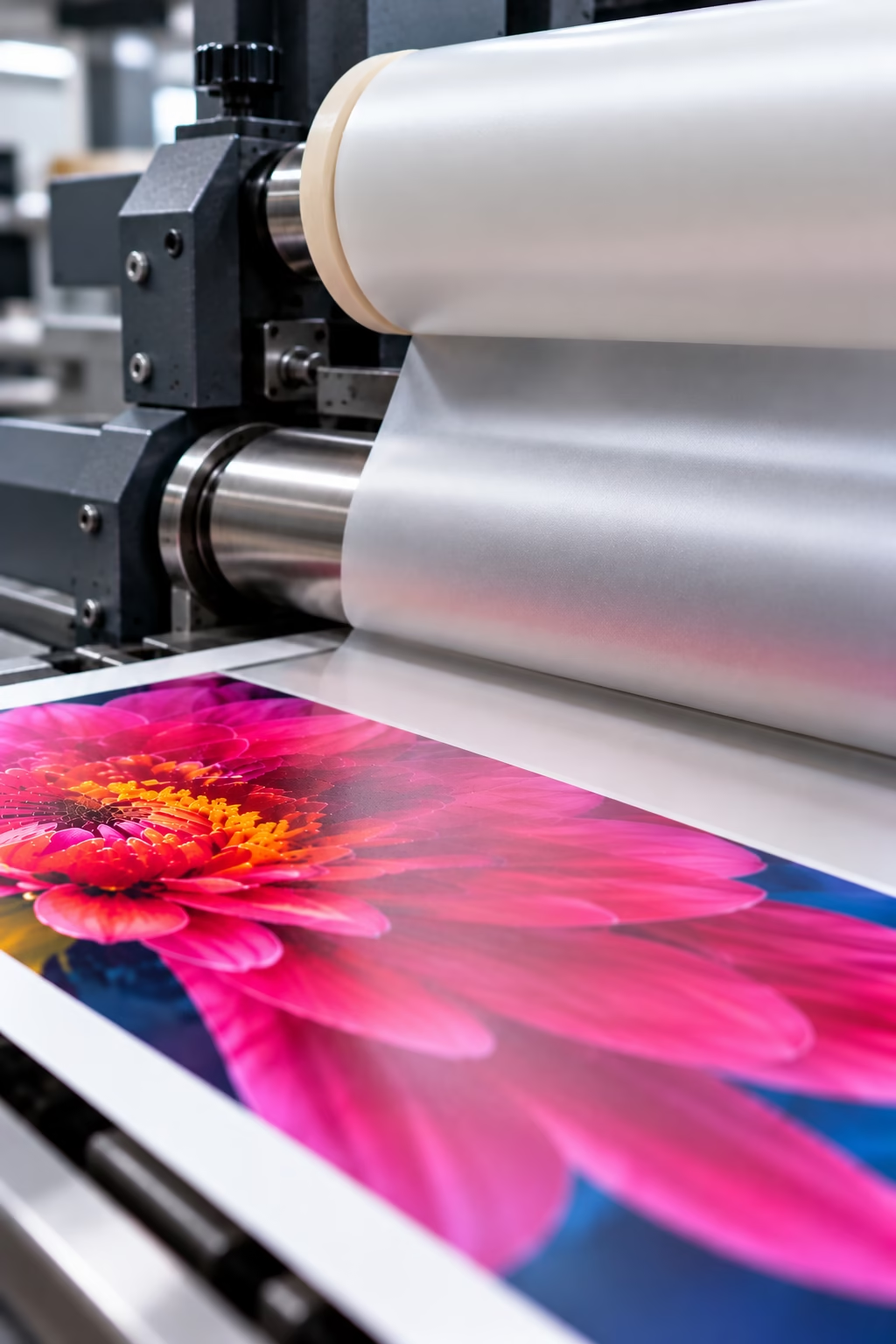
4. What is lamination?
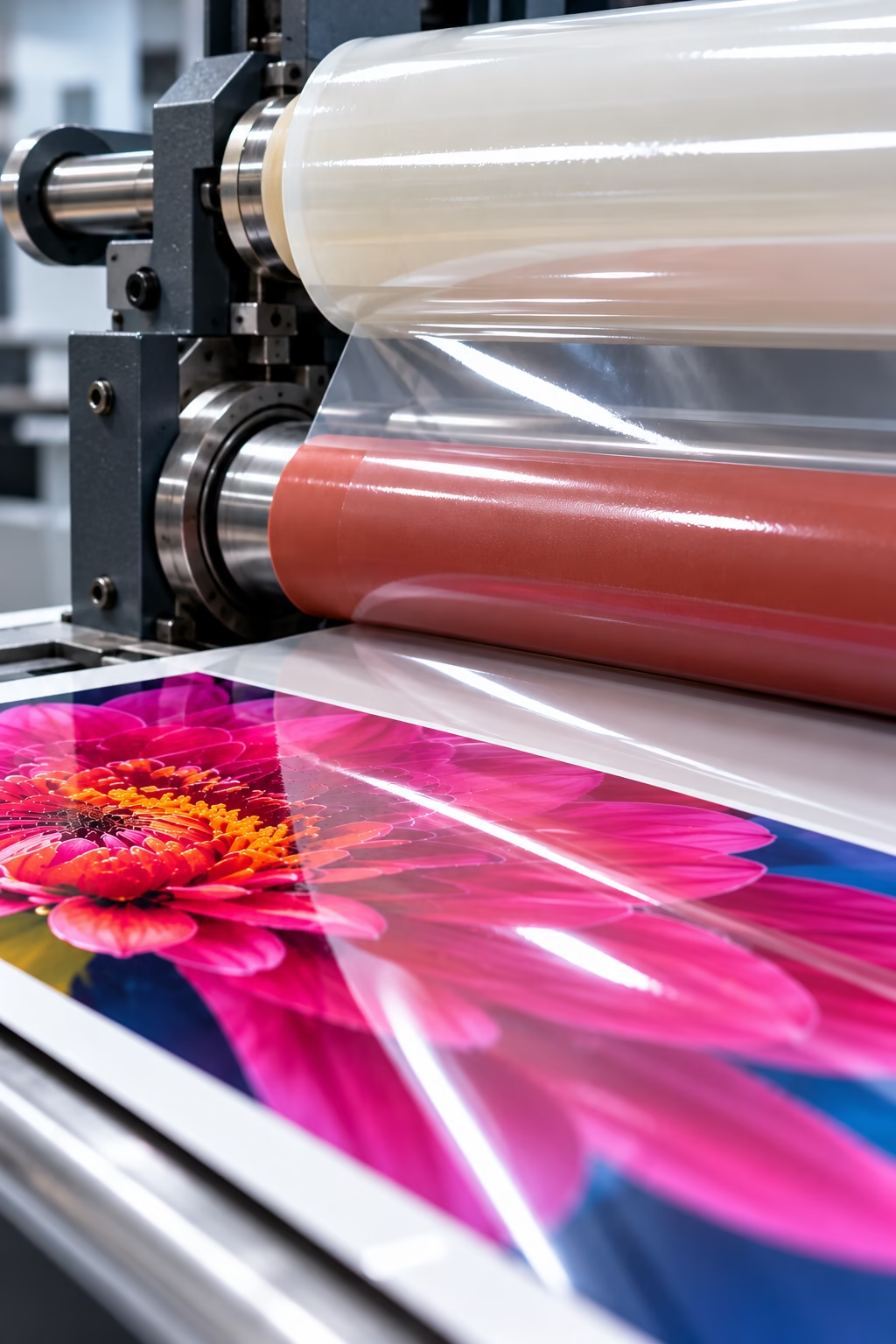
In conventional print finishing, lamination usually means bonding a thin film to the printed paper or board. The film is commonly applied using heat and pressure or an adhesive-based process, depending on the material and equipment.
Unlike a liquid coating, a film laminate creates a distinct physical layer over the printed surface. This can provide enhanced protection against moisture, handling and wear, as well as changing the feel and appearance of the product. Lamination is available in several finishes.
Gloss lamination
Gloss lamination produces a shiny surface that can make colours appear more vivid. It is often used for covers, presentation folders, menus and promotional materials.
Matt lamination
Matt lamination creates a less reflective, more subdued surface. It is popular for corporate literature, book covers and premium presentation materials.bSome matt films can show scuffing or fingerprints, so the specific film should be selected with the intended use in mind.
Soft-touch lamination
Soft-touch lamination gives the surface a smooth, velvety feel. It is often chosen for premium brochures, packaging, business cards and presentation folders.
When is lamination the better option?
Lamination is worth considering when a printed item will be handled frequently, needs enhanced resistance to moisture or wear, or requires a particular tactile finish.
However, lamination adds material, cost and a separate finishing operation. It may also affect folding, creasing, gluing, recycling and subsequent finishing. The appropriate film and production sequence should be agreed with the printer.
UV coating vs lamination: what is the difference?
UV coating and film lamination can both enhance and protect printed materials, but they achieve this in different ways. UV coating is a liquid applied to the surface and hardened by ultraviolet light. Lamination bonds a film over the printed sheet. Neither is automatically the best choice for every job.
|
Consideration |
UV coating |
Film lamination |
|
Application |
Liquid coating cured by UV light |
Film bonded to the printed surface |
|
Appearance |
Can provide gloss, matt and specialist effects |
Available in gloss, matt, soft-touch and other film finishes |
|
Protection |
Can provide good scuff and scratch resistance, depending on specification |
Generally provides enhanced protection against moisture and handling |
|
Selective effects |
Spot UV can highlight specific areas |
Film normally covers the intended surface; other effects can be added separately |
|
Folding and creasing |
Some coatings may crack if the job is not properly specified |
Film and adhesive must be suitable for the intended fold or crease |
|
Production |
May be applied inline or as a separate operation |
Usually requires a laminating operation |
If the priority is a selective glossy effect, spot UV may be appropriate. If the priority is a durable surface for a frequently handled cover or menu, film lamination may be more suitable. The printer should confirm the best option for the actual paper, print process and intended use.
Does the paper affect the finish?
Yes. The paper or board is an important part of the finishing decision. Coated paper has a surface designed to control ink absorption and can provide a suitable base for many coatings. Uncoated paper is more absorbent and has a different texture, which can affect the appearance and behaviour of a finish.
However, coated paper is not automatically the best choice for every coating or application. Compatibility depends on the paper surface, the coating formulation and the production process. If the printed piece needs to be folded, creased, glued or written on, these requirements should be considered before the finish is chosen.
Can you combine different print finishes?
Yes. Different finishing processes can sometimes be combined to create a particular appearance or performance. One example is spot UV over a matt or soft-touch laminated surface. The contrast between the glossy raised-looking highlights and the surrounding matt surface can make a logo or other design element stand out.
However, combinations require compatible materials and a suitable production sequence. Adhesion, curing, creasing, foiling and gluing requirements should be checked before production. Do not assume that every coating can be applied successfully over every laminate.
What should you tell your printer?
When requesting a quote or preparing artwork, describe the result you want rather than relying on a general term such as “gloss finish”. Confirm the following:
- Appearance: gloss, matt, satin or soft-touch.
- Coverage: the whole surface or selected areas only.
- Protection: resistance to scuffing, moisture or frequent handling.
- Construction: whether the finished piece needs folding, creasing, gluing or die-cutting.
- Use: whether it is a leaflet, brochure, book cover, menu, folder or packaging.
- Artwork requirements: whether a separate spot-colour or finishing layer is required for a special effect.
Ask your printer to confirm the recommended finish and any artwork preparation requirements before the job goes to press.
Frequently asked questions
Is UV varnish the same as UV coating?
The terms are commonly used interchangeably in print finishing. Both generally refer to a liquid coating hardened by ultraviolet light. The precise product and application can vary.
Is UV coating better than conventional varnish?
UV coating can provide a harder, more scuff-resistant surface than many conventional varnishes, but performance depends on the products being compared and how they are applied. The best option depends on the required appearance, protection and production process.
Is lamination waterproof?
Film lamination can provide substantial resistance to moisture, but a laminated printed product should not automatically be described as waterproof. Edges, folds, adhesives and the underlying material may still allow moisture to affect the item.
Can UV coating crack when folded?
It can. Some UV coatings are more susceptible to cracking at folds or creases, particularly on heavier stocks or where the coating is unsuitable for the construction. Correct specification, creasing and testing can help reduce the risk.
Does aqueous coating contain water?
Aqueous coating is water-based. It is applied as a liquid and dried, but the finished surface is not simply a layer of water and should not be assumed to be waterproof.
Which print finish is cheapest?
There is no universal answer. Cost depends on the coating or film, the amount of coverage, the printing process, the quantity, the equipment available and any additional finishing operations. Ask for the options to be priced against the same specification.
The final word on print finishing
Varnish, UV coating, aqueous coating and lamination each have a place in professional print production. The right choice depends on the appearance you want, the protection required, the paper or board, and how the finished product will be used. If you are unsure which finish to specify, discuss the application with your printer before approving the artwork. A clear specification at the start can prevent costly mistakes and help ensure that the finished print performs as intended.
Explore the world of PrePress