The Future of Prepress:
Automation, AI and the human factor
What does the future of PrePress look like? After decades of technological change, we have asked this question many times before. The challenge has always been the same: adapt, evolve and embrace the future, or step aside for what comes next.
Where will Prepress be by the end of the decade?
The printing industry has never stood still. From the introduction of desktop publishing and computer-to-plate technology to today’s cloud-based workflows and artificial intelligence, every generation has witnessed innovations that have reshaped the way print is produced. As we move towards the end of this decade, the pace of change is accelerating faster than ever.
Automation, intelligent software, cloud collaboration and AI are transforming every stage of print production. Processes that once required skilled operators working manually are increasingly becoming automated, allowing businesses to improve efficiency, reduce waste and deliver faster turnaround times. Yet despite these technological advances, one fact remains unchanged: every successful print job still depends upon effective prepress. Whether a file originates from an in-house marketing department, a creative agency, a packaging designer or an online web-to-print portal, it must be checked, prepared and verified before production begins. Colour must be accurate, fonts correctly embedded, images of sufficient resolution, bleed and trim properly defined, and the job configured to suit the chosen printing process. Prepress remains the vital bridge between design and production.
Prepress today
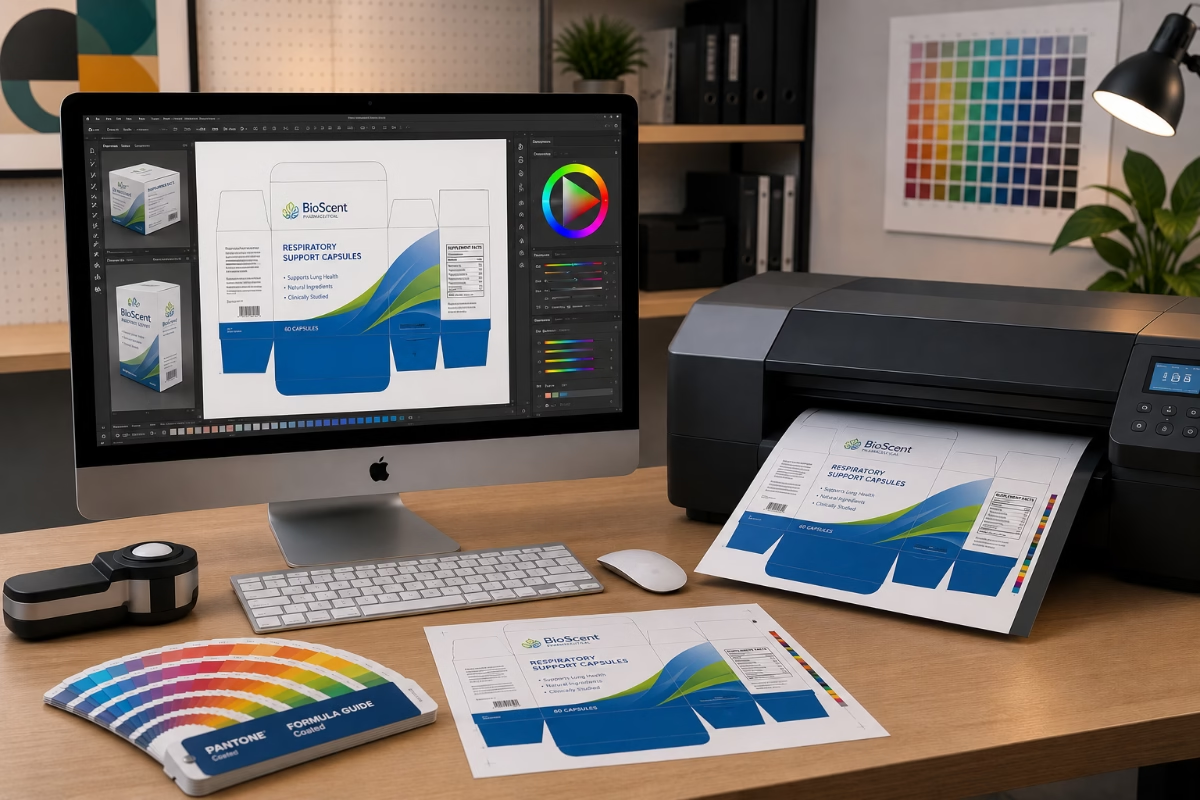
Modern prepress is far more diverse than many people realise. It is no longer confined to preparing lithographic printing plates or checking customer PDFs. Today’s prepress departments support an increasingly wide range of printing technologies, from commercial offset and digital production through to packaging, labels, large-format graphics, textiles and industrial printing.
The responsibilities also vary considerably between sectors. A commercial printer may focus on file preparation, imposition, colour management and proofing, while a packaging specialist must also consider die-lines, trapping, barcode verification, regulatory information, spot colours, varnishes, metallic inks and complex finishing processes. Wide-format businesses often deal with oversized graphics, multiple substrates and colour consistency across different printing devices.
Although the work differs from one sector to another, the objective remains remarkably consistent: ensuring that every job reaches production correctly the first time. A mistake identified during prepress may take only a few minutes to correct; the same error discovered after thousands of sheets have been printed can cost hundreds or even thousands of pounds.
Drivers of decline and change. Generative AI and automation:
Tools like Adobe Firefly and Midjourney automate basic layouts and asset generation, leading organisations like the World Economic Forum to flag graphic design among roles facing structural headwinds.
Democratised Design Tools: Platforms like Canva allow non-designers to handle routine corporate content, undercutting demand for low-complexity freelance work.
Prepress Consolidation: As physical print volumes shift and workflow automation streamlines file preparation, specialised support and prepress establishments continue a long-term contraction footprint.
Designers loosing their jobs move the Freelancing thus driving down the value of jobs. Even with these low prices design still costs more than DIY.
Technology is reshaping the workflow

The biggest change now taking place is not simply faster software or more powerful computers. It is the gradual shift towards intelligent, connected workflows. Tasks that once demanded manual intervention are increasingly being automated. Modern workflow systems can preflight incoming PDFs, identify missing fonts, detect low-resolution images, verify colour spaces, check bleed, analyse transparency issues and even correct many common production problems without human involvement. Jobs that previously occupied an operator for twenty minutes may now be processed automatically in seconds.
Cloud technology is also changing how customers interact with printers. Rather than emailing artwork backwards and forwards, clients increasingly upload files through secure portals where automated systems check artwork immediately, flag any issues and generate online proofs for approval. This reduces delays while providing a complete audit trail throughout production.
Artificial intelligence is adding another layer of capability. AI is beginning to assist with image enhancement, colour correction, content generation, file analysis and quality control. Although still developing, these technologies will become increasingly integrated into everyday production over the next five years.
The future prepress department
By 2030, many prepress departments will look very different from those of today. Routine production tasks will continue to disappear behind intelligent workflow software. File checking, image resolution analysis, font verification, colour profile validation, barcode checking and many aspects of preflighting will become almost entirely automated. Customer orders will flow directly from web-to-print systems into production workflows with minimal manual intervention.
This does not mean prepress professionals will become obsolete overnight. However, the number of prepress operators, designers and typographers is already declining, and that trend is likely to continue. As experienced people leave the industry, so too does the creativity, knowledge and craftsmanship they have developed over decades. Technology can automate tasks, but it cannot replace original ideas, critical thinking or the human instinct to create something truly distinctive.
Their role will evolve from correcting artwork to managing production systems. They will configure automated workflows, validate AI decisions, maintain colour standards, oversee compliance requirements and resolve the complex exceptions that software cannot confidently handle. Instead of spending their day fixing basic artwork problems, experienced operators will ensure the entire production ecosystem functions efficiently.
In many respects, tomorrow’s prepress operator will become part production specialist, part workflow engineer and part quality manager.
Designers, AI and the changing nature of artwork
Perhaps the greatest transformation over the next decade will not take place inside the printing company at all. It will happen at the point where artwork is created. For more than thirty years, designers have built artwork using increasingly sophisticated desktop publishing software. Adobe Illustrator, InDesign and Photoshop have become industry standards, supported by an enormous ecosystem of stock photography, fonts, templates and plug-ins. The designer remained firmly in control, making every creative and technical decision before supplying a finished PDF for production. Artificial intelligence is beginning to change that relationship.

Rather than searching for inspiration, downloading stock images and constructing layouts manually, designers can now describe their requirements using simple text prompts. Within seconds, AI can generate multiple design concepts, produce original illustrations, suggest typography, write marketing copy and even prepare complete page layouts.
Today’s technology is only the beginning.
By the end of the decade, AI assistants will understand corporate branding, previous campaigns, customer preferences and production requirements. Instead of creating a single flyer or brochure, designers will generate entire marketing campaigns from a single creative brief.
A simple request such as “Produce an autumn promotion for our garden furniture range” could generate printed leaflets, social media graphics, digital advertising, email campaigns, exhibition graphics, packaging artwork and website banners simultaneously. Every version would be automatically resized, translated into multiple languages, personalised where appropriate and optimised for its intended platform. For prepress departments, this represents a fundamental change.
Historically, much of the workload involved correcting customer artwork. Missing fonts, RGB images, incorrect bleed, low-resolution graphics and transparency issues became everyday challenges. As AI becomes increasingly aware of production requirements, many of these technical mistakes may disappear before the file ever reaches the printer. That does not remove the need for prepress. Instead, it changes the questions that need answering.
Rather than asking whether a PDF contains sufficient bleed, prepress professionals may be verifying whether AI has interpreted a customer’s branding correctly, whether legally required information has been included, or whether variable data has been generated accurately across thousands of personalised versions. Technical expertise will remain essential, but the focus will gradually move from correcting artwork to validating automated decisions.
Towards a zero-touch workflow
The phrase “lights-out manufacturing” has existed within industry for many years. Printing is now moving steadily towards its own version of that concept. A truly integrated workflow allows jobs to move from customer submission to finished production with minimal manual intervention. Customers upload artwork through an online portal where automated preflight software immediately analyses every file. Potential problems are identified within seconds. Simple issues are corrected automatically, while more complex exceptions are referred to a prepress specialist.
Once approved, the job flows directly into the production workflow.
Management Information Systems communicate with scheduling software. Workflow automation generates the correct imposition. RIP software prepares the file for the appropriate press. Colour management systems ensure consistency across different devices, while finishing instructions accompany the job throughout production.
Every stage shares information with the next.
The result is not simply faster production. It is greater consistency, fewer manual touchpoints and significantly fewer opportunities for costly human error. Many larger printing companies have already begun this journey. Over the next five years these technologies will become increasingly accessible to medium-sized and smaller businesses as software becomes more intelligent and affordable.
The goal is not to remove people from the process entirely. Instead, automation removes repetitive tasks, allowing experienced staff to concentrate on the work that genuinely benefits from human judgement and technical knowledge.
The new role of the prepress professional
Every major technological change has prompted predictions that prepress is about to disappear. Desktop publishing was expected to replace typesetters. Computer-to-plate was expected to eliminate traditional platemaking. Digital printing was expected to remove the need for prepress altogether. None of those predictions proved entirely correct.
Instead, each technological advance changed the nature of the work. The prepress professional of 2030 is unlikely to spend hours correcting customer PDFs or manually preparing simple production files. Those routine processes will increasingly be handled by intelligent software operating within highly automated workflows. Instead, tomorrow’s specialists will become workflow managers, colour experts, quality controllers and production consultants.
Their responsibilities will include configuring automation systems, validating AI decisions, maintaining colour accuracy, managing digital assets, ensuring compliance with customer specifications and resolving the unusual production problems that software cannot confidently interpret.
As automation becomes more sophisticated, the value of human expertise increases rather than diminishes. Someone must still understand the limitations of different printing processes, appreciate how inks behave on different substrates, recognise potential production issues before they occur and make informed decisions when automated systems reach their limits.
Experience cannot be automated
Artificial intelligence is remarkably good at recognising patterns, analysing data and performing repetitive tasks at extraordinary speed. It can identify missing fonts, detect low-resolution images, compare colours against predefined tolerances and even suggest corrections before a human operator reviews the file.
What AI cannot do is replace decades of practical production experience. Printing has always been an industry where knowledge is accumulated over time. Experienced prepress operators understand how different substrates affect colour reproduction, how trapping influences print quality, when overprinting creates problems, why certain transparencies fail on particular RIPs and how seemingly insignificant artwork changes can create expensive production issues further down the line.
These are not simply technical rules stored in software. They are lessons learned from thousands of jobs produced over many years. As experienced professionals retire, there is a genuine risk that much of this practical knowledge could gradually disappear. Software can only apply the rules it has been given. If the people configuring those systems no longer possess a deep understanding of print production, automation becomes less effective regardless of how intelligent the technology appears.
This challenge is not unique to printing. Manufacturing, engineering and many other technical industries are facing the same issue as experienced workforces retire faster than new specialists can replace them.
The solution is not to resist automation but to ensure that valuable expertise is transferred into the next generation of professionals. The businesses that thrive will be those that combine intelligent software with experienced people who understand both the technology and the craft.
Quality still matters
One of the unintended consequences of increasing automation has been a gradual shift in expectations. In today’s digital world, speed often takes priority over perfection. Websites are updated continuously, marketing campaigns are published instantly and social media content is produced in enormous quantities. Minor typographical errors or design inconsistencies frequently go unnoticed because they can simply be corrected later. Print is different.
Once thousands of sheets have been printed, folded, finished and distributed, mistakes become expensive. A missing barcode, an incorrect colour, a spelling error on packaging or a misplaced registration mark cannot simply be edited online. For this reason, quality control will remain one of the most important responsibilities within prepress.
Artificial intelligence will undoubtedly reduce many routine mistakes, but every automated decision still requires governance. Customers expect brand colours to remain consistent. Pharmaceutical packaging must comply with strict regulations. Food labels must contain accurate ingredient information. Financial documents must reproduce exactly as intended.
These are responsibilities that extend beyond software. They demand accountability, technical understanding and professional judgement. Technology may reduce the number of routine interventions, but the importance of getting every job right will never diminish.
The Prepress Company of 2030
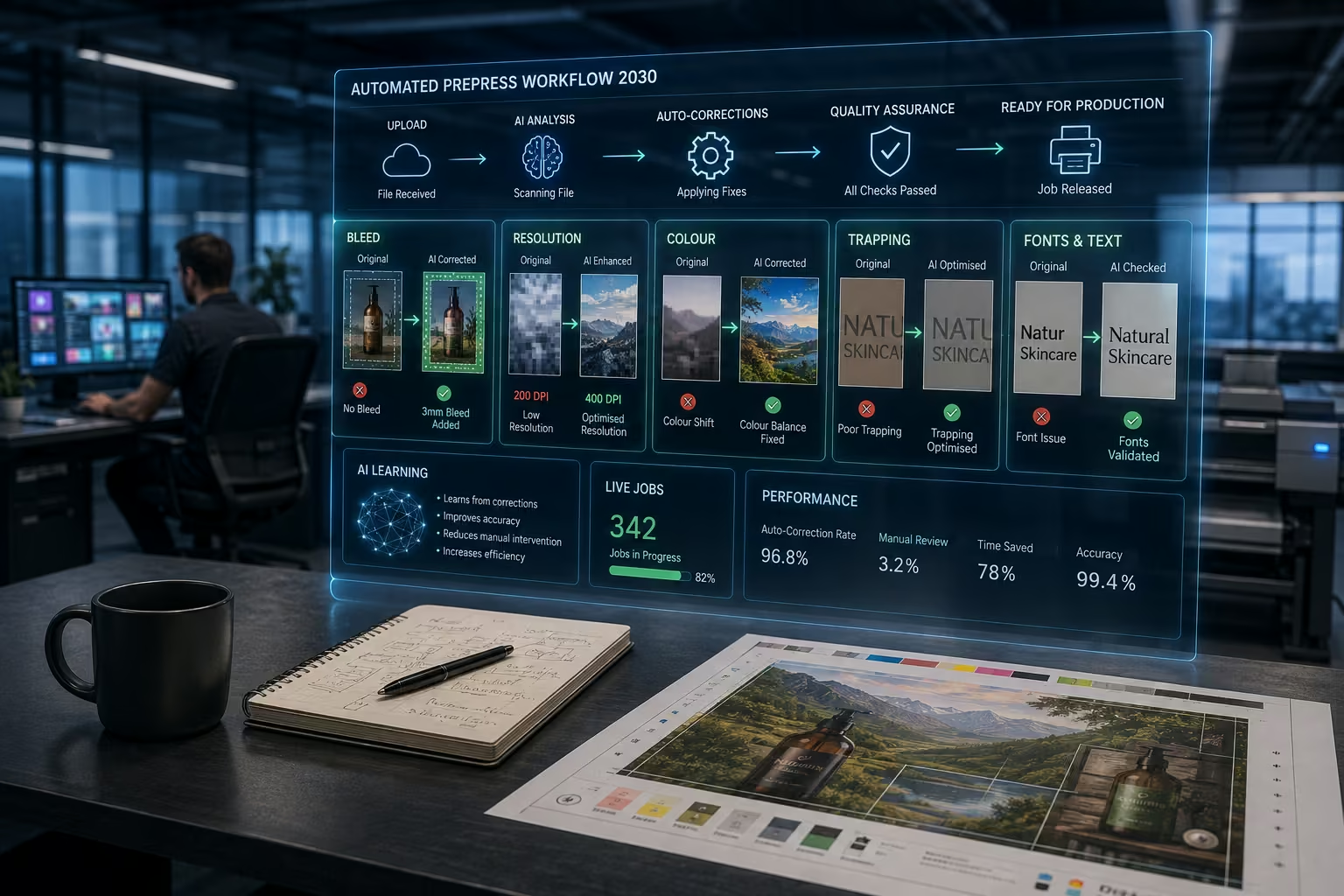
Imagine walking into a modern prepress department towards the end of the decade. Operators manually checking PDFs have largely disappeared. Instead, large workflow dashboards display the progress of live jobs moving automatically through production. Customer artwork arrives through secure cloud portals where AI immediately analyses every file. Colour spaces are verified, images, fonts and bleed measured automatically. Typography is checked, windows and orphans, poor tracking , font size and colour. Even the contact details are checked, verified.or flagged for error. Straightforward corrections are made without human intervention, while only unusual or high-risk jobs are flagged for specialist review. Most errors will automatically corrected, bleed, low resolution images, poor trapping, all the problems that normally flag up are simply put right, Even colour shifts will be eliminated.
Production managers monitor the entire workflow in real time.
Designers, customers and printers collaborate through browser-based proofing systems, commenting on artwork simultaneously regardless of where they are located. Every amendment is tracked automatically, creating a complete audit trail from the original design brief through to the finished printed product.
Artificial intelligence quietly supports almost every stage of production, but rarely works alone. Human specialists oversee the process, monitor quality, configure workflow rules and intervene whenever judgement, experience or customer requirements extend beyond the capabilities of software.
It is a highly automated environment. It is also one where experienced people remain central to delivering consistent quality, for the time being.
Looking Beyond 2030
Predicting the future of technology is never straightforward. Few people could have anticipated the impact that desktop publishing, the internet or cloud computing would have on the printing industry. Artificial intelligence is likely to prove equally transformative.
Some jobs will undoubtedly change. Routine production tasks will continue to become increasingly automated, while intelligent workflow systems will remove much of the repetitive work that has traditionally occupied prepress departments. Yet the future of prepress is not about replacing people with machines. It is about allowing technology to perform repetitive tasks while skilled professionals concentrate on the work that genuinely requires human expertise.
The companies that succeed over the next decade will not necessarily be those with the most sophisticated software. They will be those that successfully combine automation with experience, investing in workflow technology while continuing to develop the people who understand colour, typography, print processes and production. Throughout the history of printing, every major technological advance has created concerns about the future of traditional skills. In reality, those skills rarely disappear completely; they evolve.
Prepress has already transformed dramatically over the past forty years. Manual paste-up became desktop publishing. Film gave way to computer-to-plate. Conventional proofing became digital colour management. Today, artificial intelligence and workflow automation represent the next stage of that evolution.
What has remained constant throughout every period of change is the industry’s need for quality. Customers still expect accurate colour. Brands still demand consistency. Packaging still needs to comply with legislation. Printers still require files that reproduce correctly, every time. Technology will continue to change how those objectives are achieved, but it does not change their importance.
Perhaps that is the most significant lesson for the decade ahead. The future of prepress is not defined by artificial intelligence. It is defined by the intelligent use of artificial intelligence. The businesses that prosper will not be those that simply automate everything they can. They will be those that understand where automation adds value, where experience remains indispensable and how the two can work together.
Conclusion
Artificial intelligence is already reshaping the print and prepress industry. Many entry-level production roles, junior design positions and traditional prepress tasks are being automated as businesses look for greater efficiency and lower operating costs. Skills that once took years to master can now be imitated well enough by software to satisfy clients whose priority is speed and price rather than originality or technical excellence.
The market has become saturated with AI-generated artwork because the barrier to creating basic visuals has virtually disappeared. Anyone can produce a logo, advertisement or layout within seconds. While much of this work lacks originality, typography, consistency and production knowledge, it has dramatically reduced the value of routine creative work and placed increasing pressure on professional designers to justify their expertise.
The impact extends far beyond designers and prepress operators. Photographers, illustrators, copywriters, proofreaders, print buyers, estimators and even sales teams are seeing parts of their roles automated or assisted by AI. Few areas of the traditional print workflow will remain untouched over the coming decade.
Yet there is another side to this transformation. As generic, AI-assisted design becomes increasingly common, genuine expertise becomes more valuable. Businesses producing high-quality brands, packaging, publications and marketing still need people who understand typography, colour management, print production, accessibility, visual communication and the subtleties that separate professional design from automated output.
AI will undoubtedly make print production faster, cheaper and more accessible. However, it cannot replace decades of practical experience, creative judgement or the ability to solve complex visual communication problems. The future of prepress is unlikely to belong to those who resist AI, nor to those who rely on it entirely, but to the professionals who know when to trust it, when to challenge it and, most importantly, when human creativity must take over.
Written by Steve Sankey. September 2026.
Credits: Photo by: unsplash.com – Amador Loureiro
Explore the world of PrePress